Election Day for Kids
A free, nonpartisan voting lesson for grades 3 to 7: two short animated episodes, two songs and a plan you can teach in one class period.
No card required. Made by Brandee Blocker Anderson, a teacher, law professor and mom.
How to Explain Voting to Kids
Three ideas from the episodes that work for any election, in any year, without taking a side.
A ballot is official
It isn't a survey and it isn't a gold star. It gets counted, and it becomes part of the decision.
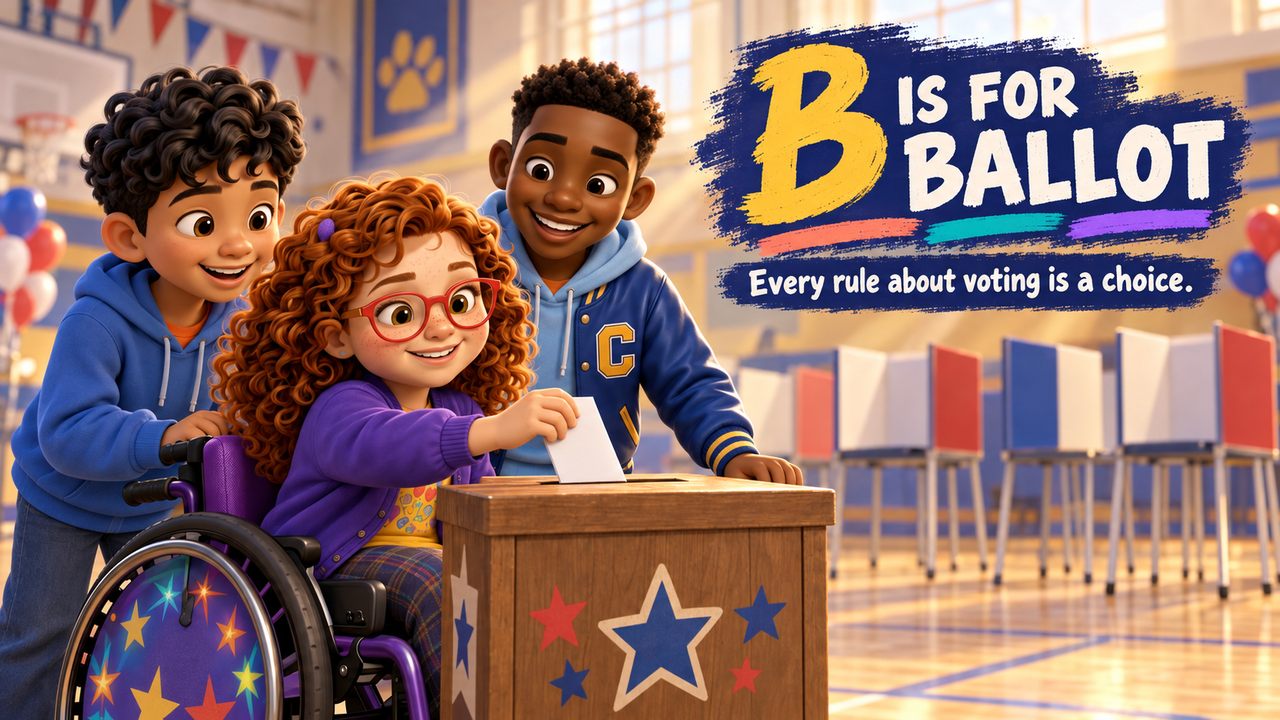
From B Is for BallotEvery voting rule is a choice
Somebody wrote it. So ask: does this rule protect the election, or does it keep people out?
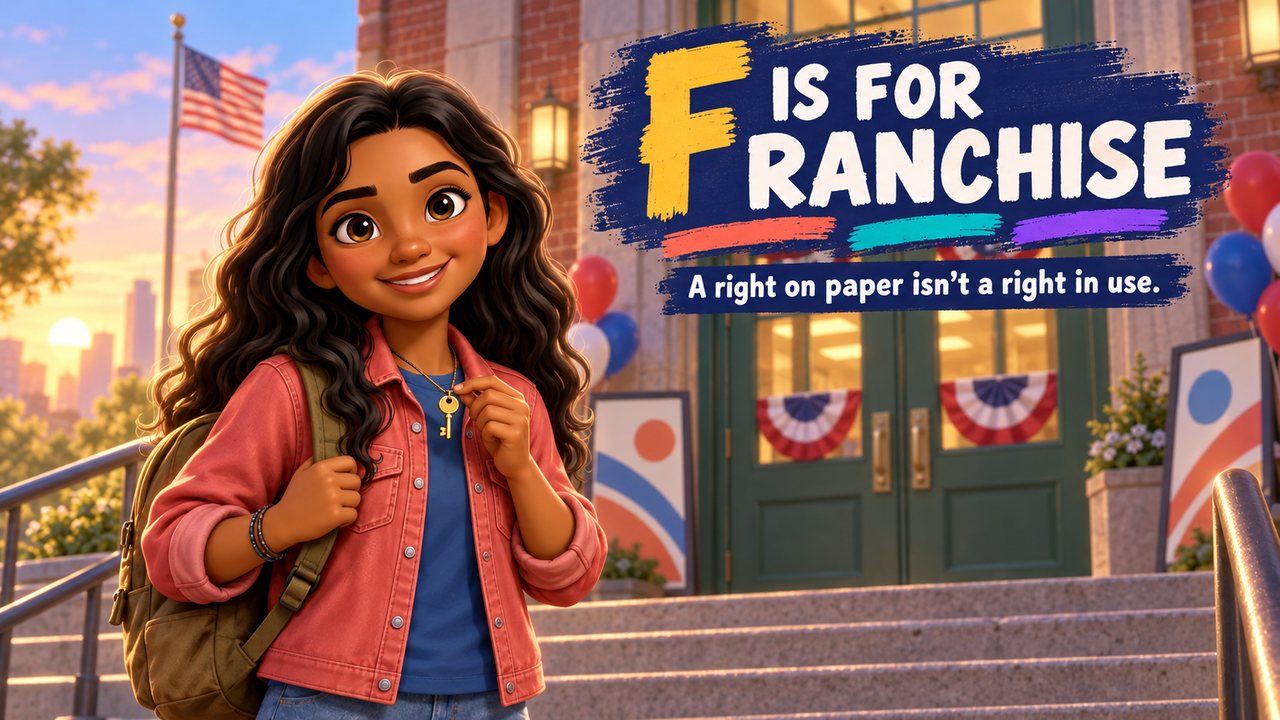
From B Is for BallotA right needs a path
Having the right to vote and being able to use it can be years apart. Ask what's standing in the way, and who put it there.
From F Is for FranchiseTwo Episodes, Two Songs
Each episode is a story kids can see themselves in, and each song carries the idea home. Both are free in the demo.
B Is for Ballot
It's election week at Freedom Hill Middle School, and a new rule takes the vote from students with a detention. The Civic Crew asks whether the rule protects the election or punishes people, and then they rewrite it.
"You don't have to earn having to live with something." Nora
F Is for Franchise
Sofia thinks voting is easy, until her 98-year-old great-grandmother tells the story of the clerk who stopped her from registering in 1950. Kids learn the difference between having a right and having a real path to use it.
"I'm going to ask what's standing in their way, and who put it there." Sofia
Teach It in One Class Period
About 50 minutes with B Is for Ballot. Every step comes from the episode's educator unit.
- 5 min
Warm-up. Ask, "What's the difference between a survey and a ballot?" Students turn and talk, then share.
- 5 min
Words to know. Ballot, vote, election and eligible. Students predict who should get a ballot in a school election.
- 12 min
Watch the episode. Pause at 2:02: is this rule fair? Thumbs up, down or sideways. Pause at 3:06, when Mika says, "So they have to live in it. They just don't get to say anything about it." Is that a problem?
- 8 min
Talk it through. Should a ballot be something you earn by behaving well, or should it belong to anyone who has to live with the result?
- 16 min
Watch "Count Me In." Replay the music video and pause at the history stops. Who was kept out, and how did the door open?
- 4 min
Exit ticket. "A ballot is different from a survey because ___."
Only 15 minutes?
Play one music video and pull one discussion question.
Take it home
With F Is for Franchise, kids interview a family member about their first vote. Not every family has a voter, so there's always another option.
Rules and Outcomes, Never Parties
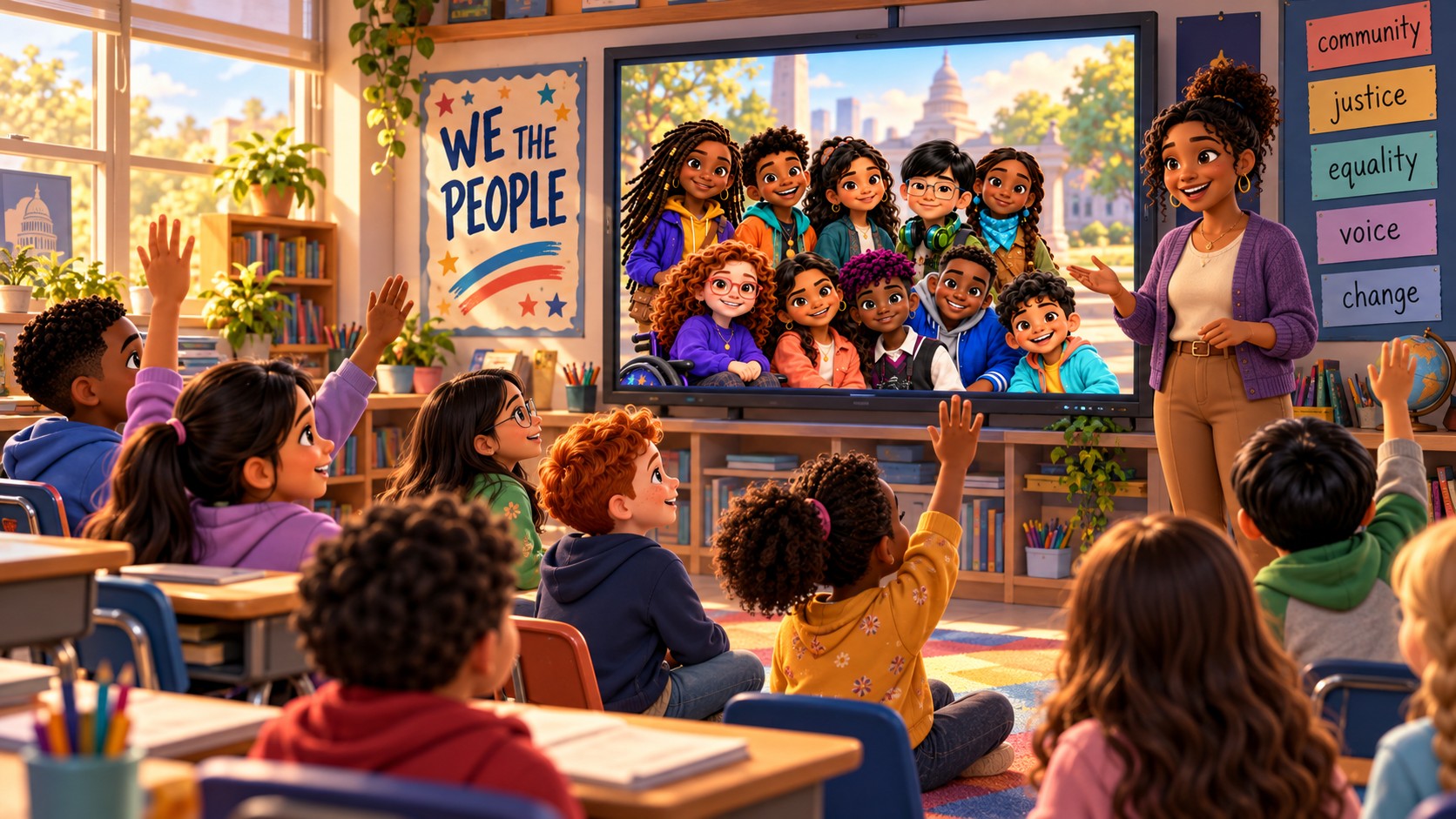
Kids learn how voting works without anyone telling them who to vote for.
- The episodes and songs name no candidates and no parties.
- When current events come up, ask three questions: What's the rule? Who can't get through? Who's watching the path?
- Historical facts are stated plainly. They aren't opinions.
- Not every family has a voter. Never ask a student why someone at home doesn't vote.
Get the Free Election Day Lesson
Sign up for the free demo to watch full episodes A to H, including B Is for Ballot and F Is for Franchise. No card required.
Teaching a whole grade, school or program? Get in touch.