Explore the Full Episode Library
26 episodes • story-first learning • music-driven moments • classroom and family friendly
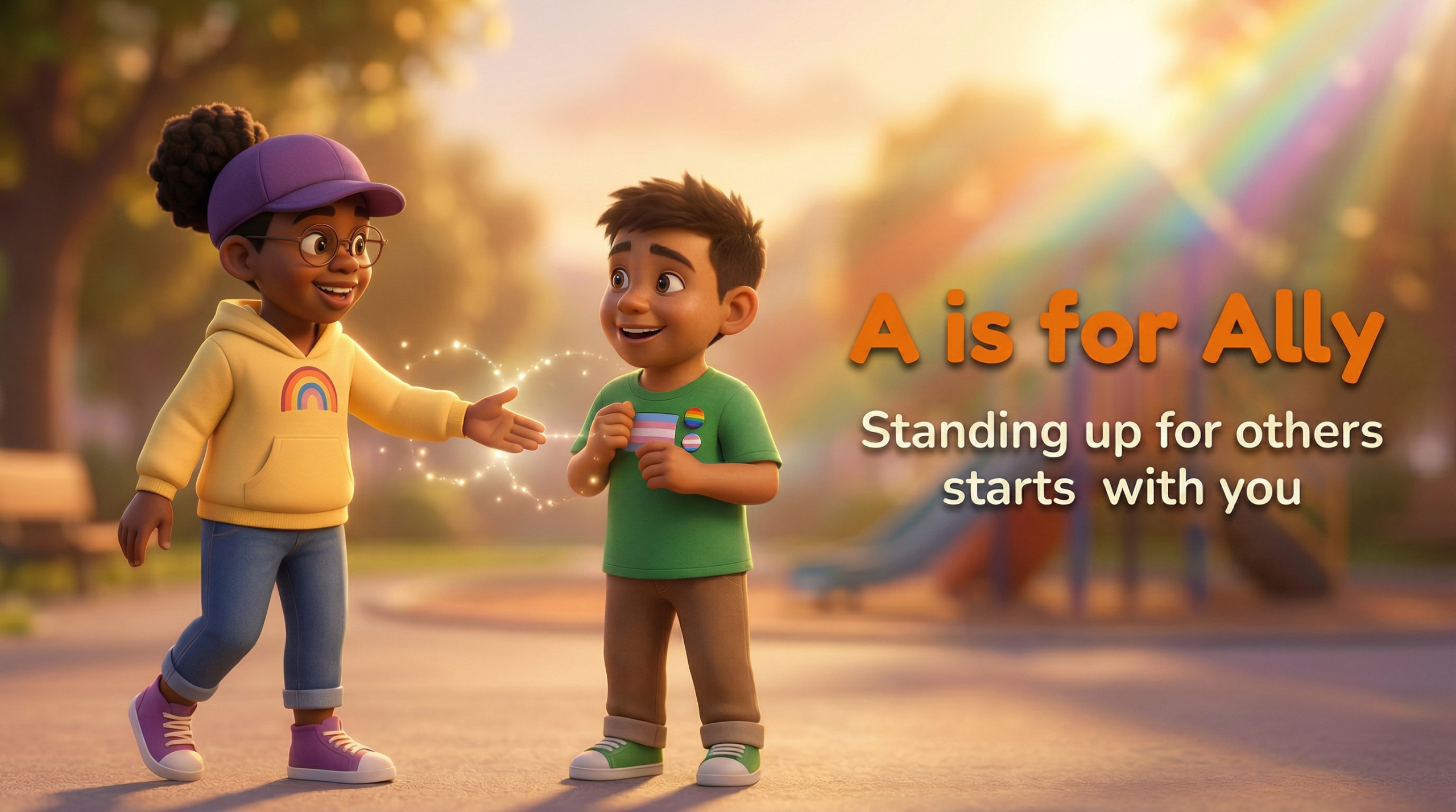
Ally
Standing up for others starts with one voice.
Episode Hook:
Standing up for others starts with you.
Story Summary
During a classroom “Share Something About Yourself” activity, Alex takes a risk and opens up about their identity—only to be met with confusion, whispers, and laughter. The room goes quiet. No one steps in. Until Riley does. What starts as one voice becomes many. Riley stands. Then Jordan. Then Dev, Nina, and Maya.
Together, they shift the energy of the room—turning discomfort into accountability, and silence into support. By the end of the moment, the class doesn’t just hear a definition of allyship—they witness it in action.
What Kids Will Learn
- What allyship looks like in real life—not just in theory
- Why silence can sometimes cause harm
- How to respond when someone is being mocked or misunderstood
- That courage can spread from one person to many
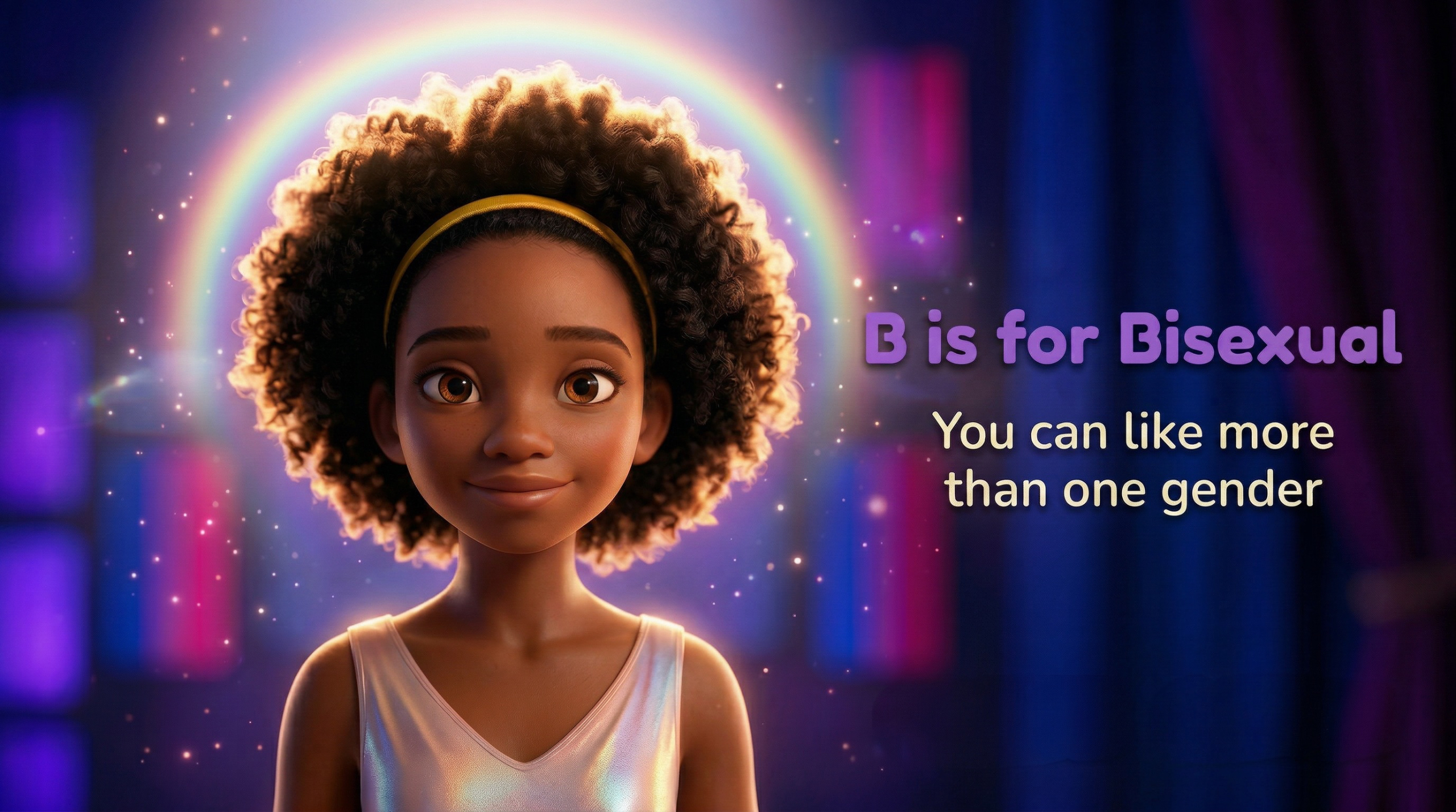
Bisexual
You can like more than one gender—and that’s okay.
Episode Hook:
You can like more than one gender.
Story Summary:
When Sam asks a simple question—“What does bi actually mean?”—it opens the door to a deeper conversation. At first, the responses are filled with assumptions. “So they just like everyone?” "That sounds confusing…”
The moment isn’t loud—but it is uncomfortable. Maya gently steps in—not to argue, but to clarify. Through honesty and patience, she reframes the misunderstanding. Being bisexual isn’t about liking everyone. It’s about not being limited to just one gender.
As the conversation shifts, so does the room. Confusion turns into understanding. Judgment softens into respect. By the end, the group doesn’t just learn a definition—they learn how to listen, ask better questions, and make space for identities different from their own.
What Kids Will Learn
- What bisexuality actually means (and what it doesn’t mean)
- Why assumptions can feel hurtful—even when unintended
- How to ask questions respectfully
- That understanding begins with listening
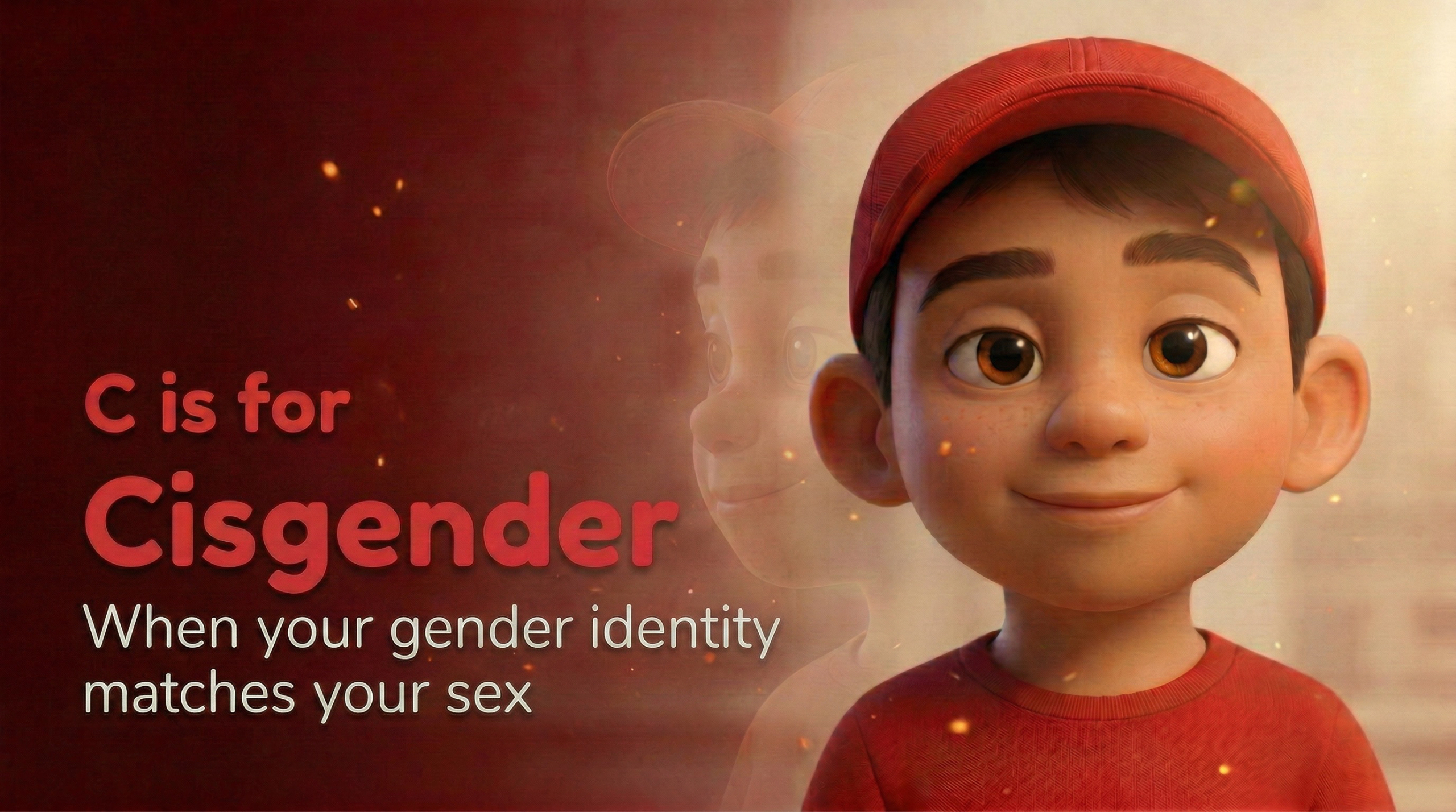
Cisgender
When your gender identity matches your biological sex
Episode Hook:
Some people never have to question who they are—and that matters.
Story Summary
Riley introduces a quiet truth: some identities feel so natural, they go unnoticed. For many people, their name is called—and it fits. No second thought. No discomfort. But for Alex, it’s different. When the teacher calls “Alexander,” Alex quietly responds—but something feels off. It’s subtle. Easy to miss. Easy to ignore. Sam begins to realize something he’s never had to think about before: not everyone gets the same ease of being seen correctly.
What Kids Will Learn
- What cisgender means in simple, real-life terms
- That some people move through the world without having to question their identity
- How repeated small moments can have a big emotional impact
- That awareness creates the opportunity to act
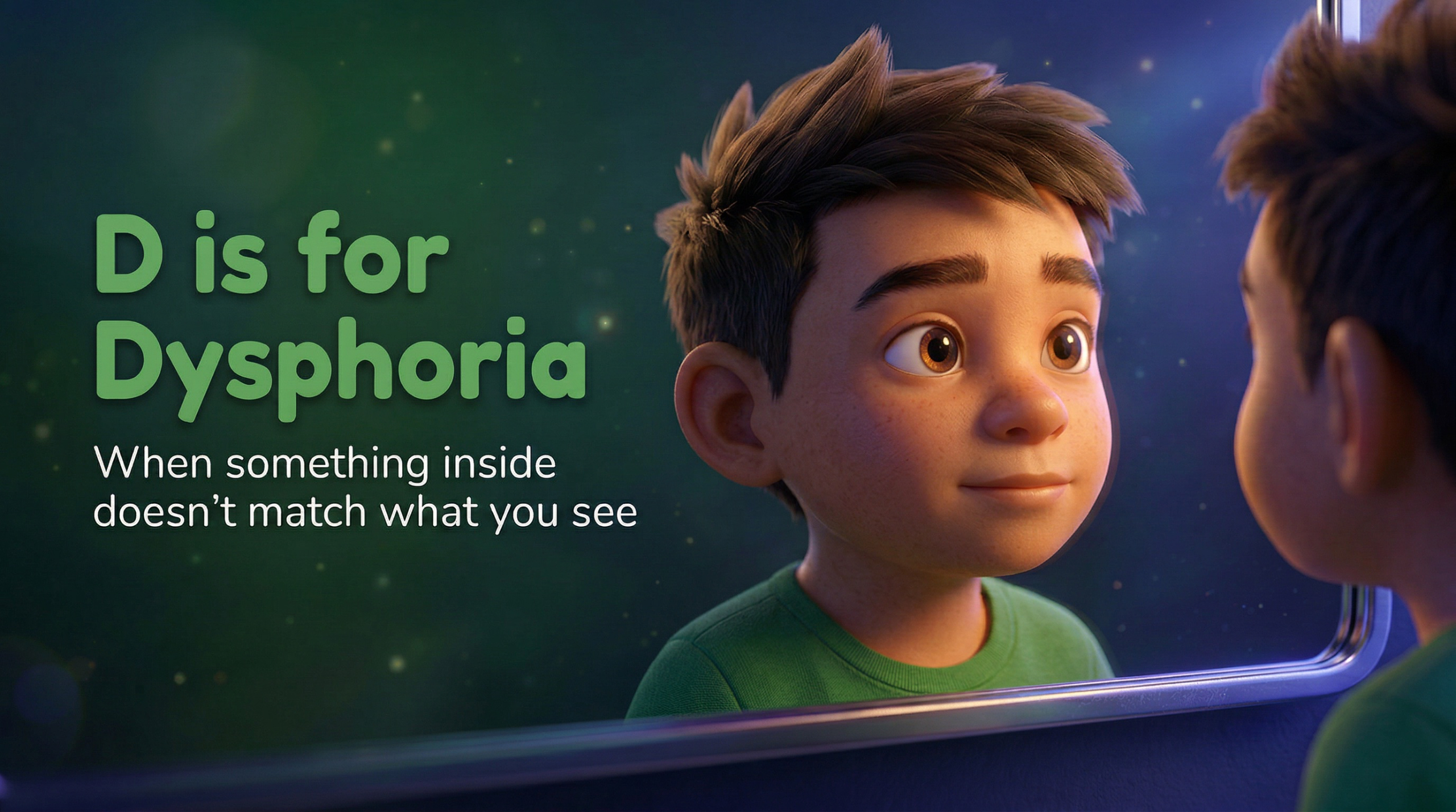
Dysphoria
When something inside doesn’t match what others see.
Episode Hook:
Sometimes what you see doesn’t match what you feel.
Story Summary:
Alex struggles with a quiet but powerful feeling—something isn’t right, but it’s hard to explain. Through visual storytelling and supportive friendships, Alex begins to find language for their experience and moments of relief in being seen and affirmed.
What Kids Will Learn:
- What dysphoria is (in age-appropriate terms)
- How to show compassion and support
- That feelings can be complex and valid
- The importance of affirmation
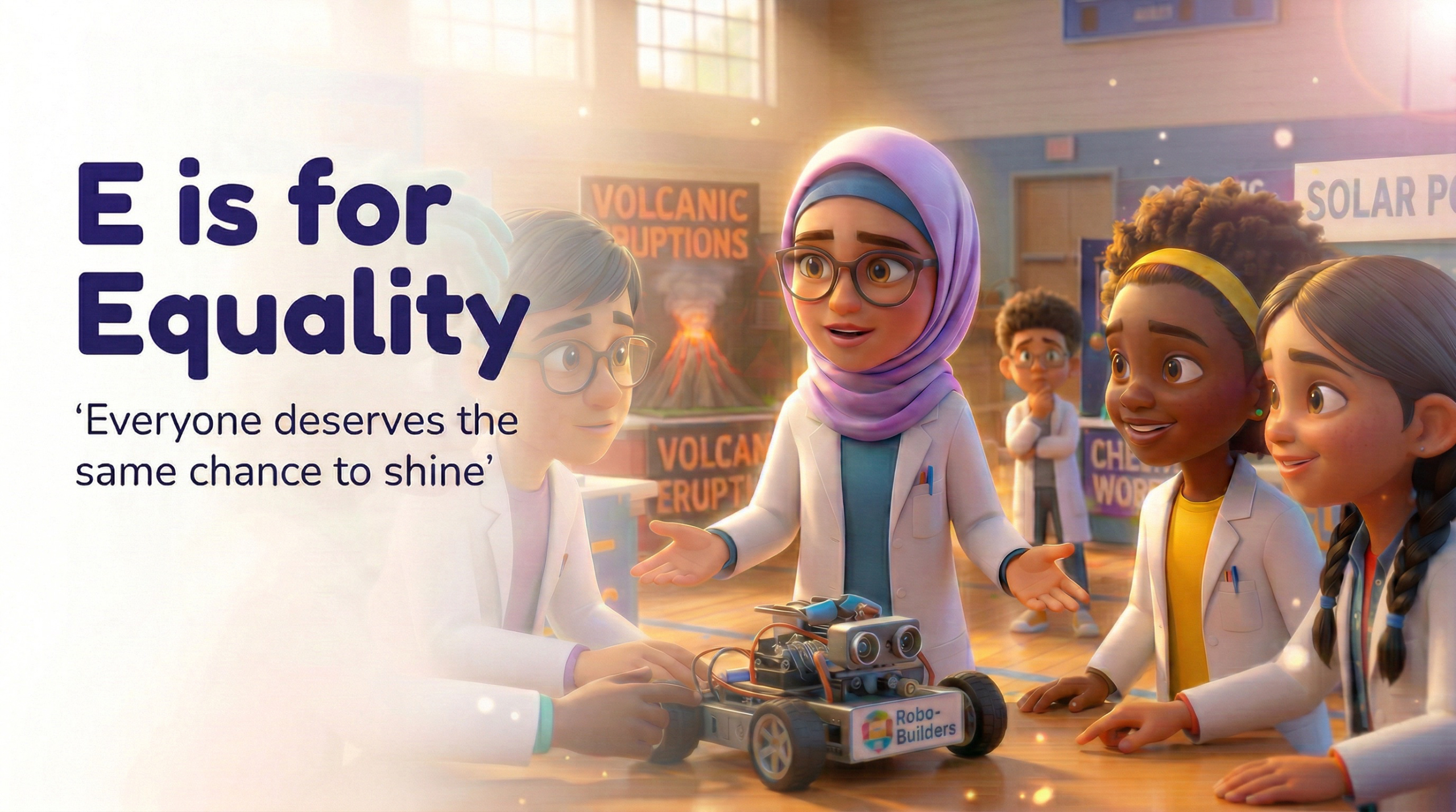
Equality
Everyone deserves the same chance to shine.
Episode Hook
Everyone deserves the same chance to share their ideas.
Story Summary
At the school science fair, Amira is excited to present—until she notices something isn’t right. The boys take over, pushing their ideas forward while Maya and Nina are told to wait—even though they helped build the project. The moment is subtle. Easy to ignore. But Amira doesn’t. She steps forward: “We’re all scientists today. That means everyone deserves the same chance to share.” The room shifts. The group listens. And this time, Maya and Nina lead.
What Kids Will Learn
- What equality looks like in real life
- How unfairness can show up in small ways
- That everyone’s ideas have value
- How to speak up with respect
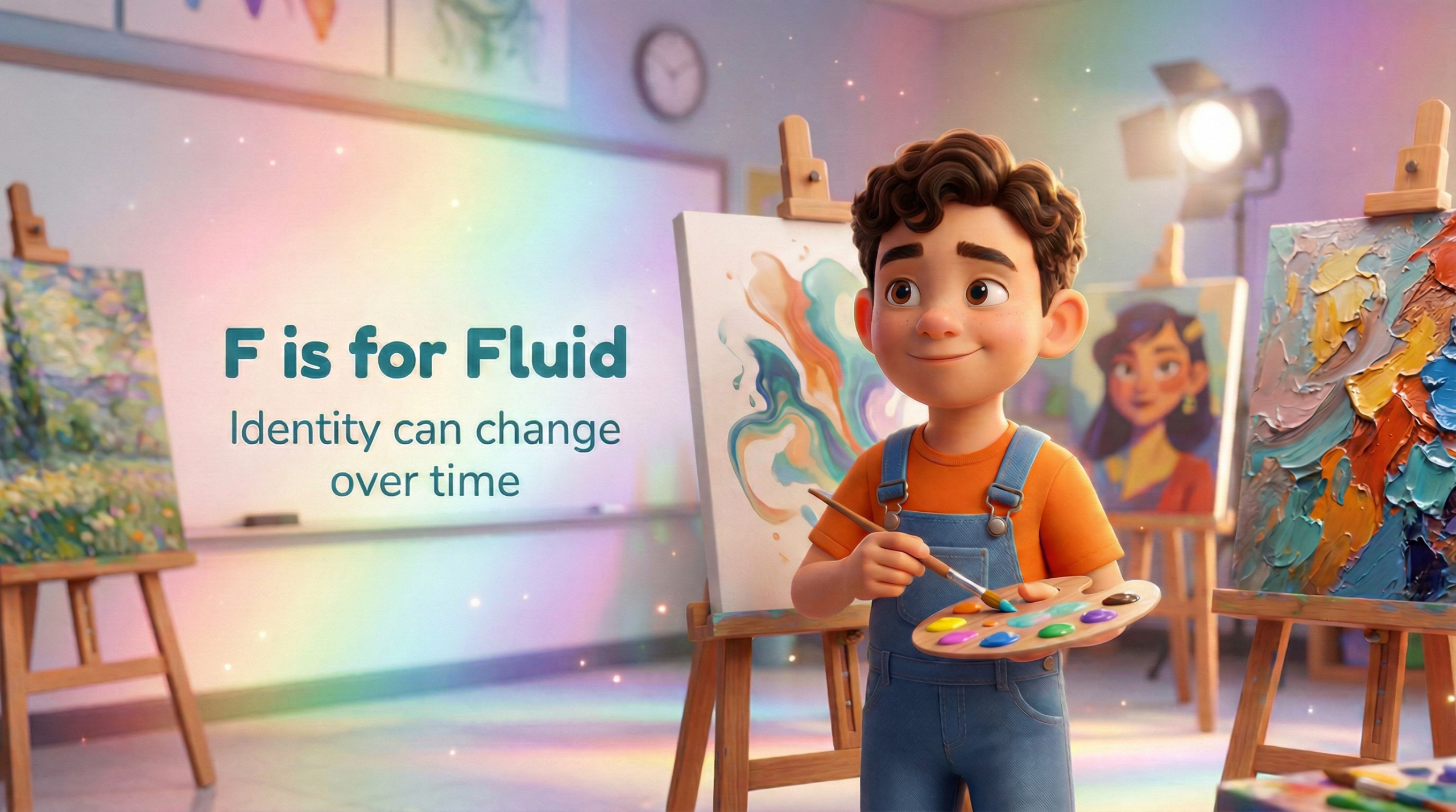
Fluid
Identity can shift—and that’s real.
Episode Hook
You don’t have to stay the same to be real.
Story Summary
In art class, J paints a river—colors blending, shifting, and flowing. When Sam notices J’s art is always changing, a deeper conversation begins. J explains that their identity feels the same way: sometimes bold, sometimes gentle, always evolving. The group begins to understand that identity doesn’t have to stay fixed to be true. Like art, it can grow, shift, and still belong completely to you.
What Kids Will Learn
- What it means for identity to be fluid
- That change doesn’t make identity less real
- How to respect experiences different from their own
- That growth and self-discovery take time
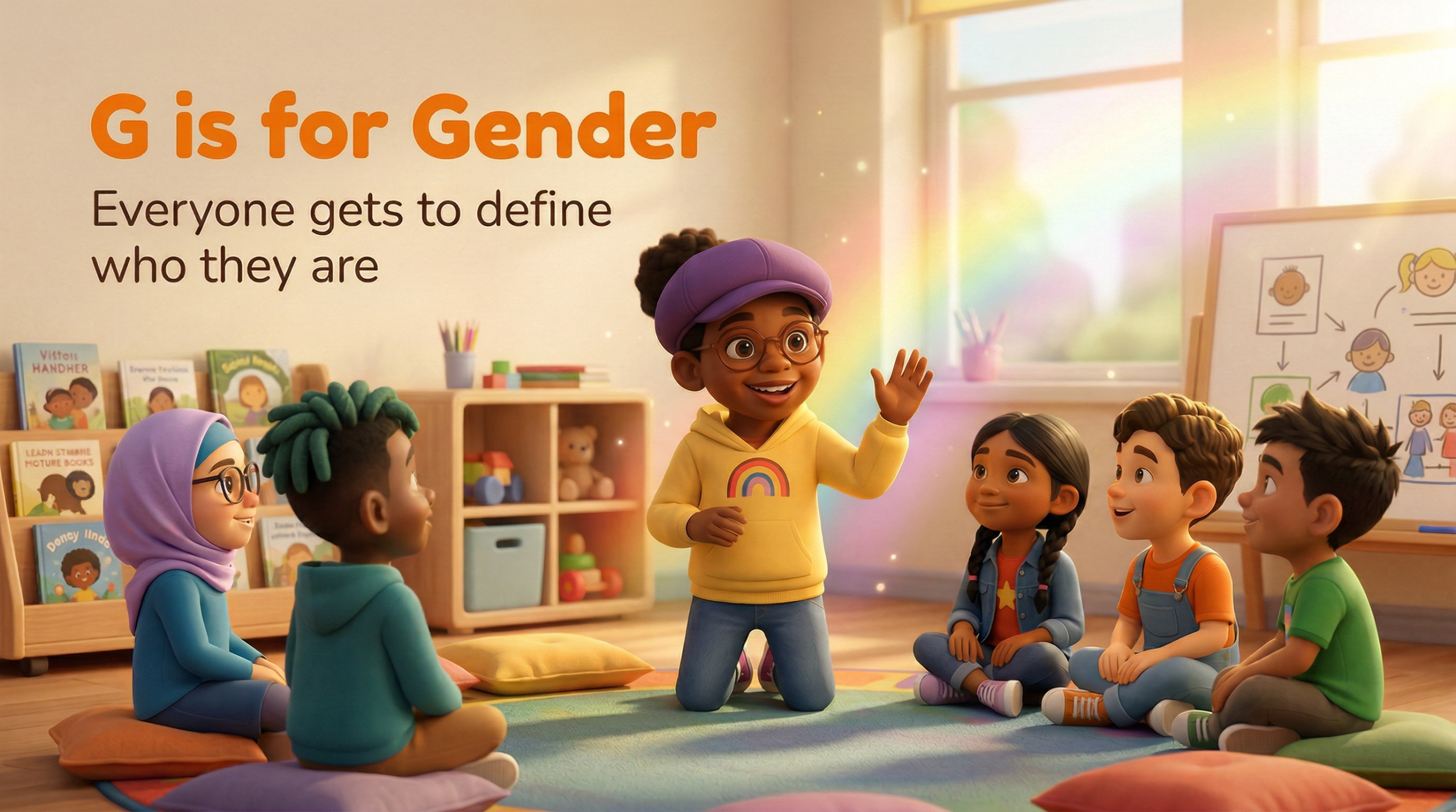
Gender
Who you are isn’t one-size-fits-all.
Episode Hook
There’s no one right way to be you.
Story Summary
During a “Who I Am” classroom activity, students share how they describe their gender. Through these honest moments, Ms. Lee helps the class understand the difference between sex and gender—and reminds them that identity is personal. By the end, the students draw themselves as they see themselves: unique, valid, and worth celebrating.
What Kids Will Learn
- What gender means (in simple, inclusive terms)
- The difference between sex and gender
- That gender can be expressed in many ways
- That everyone defines themselves
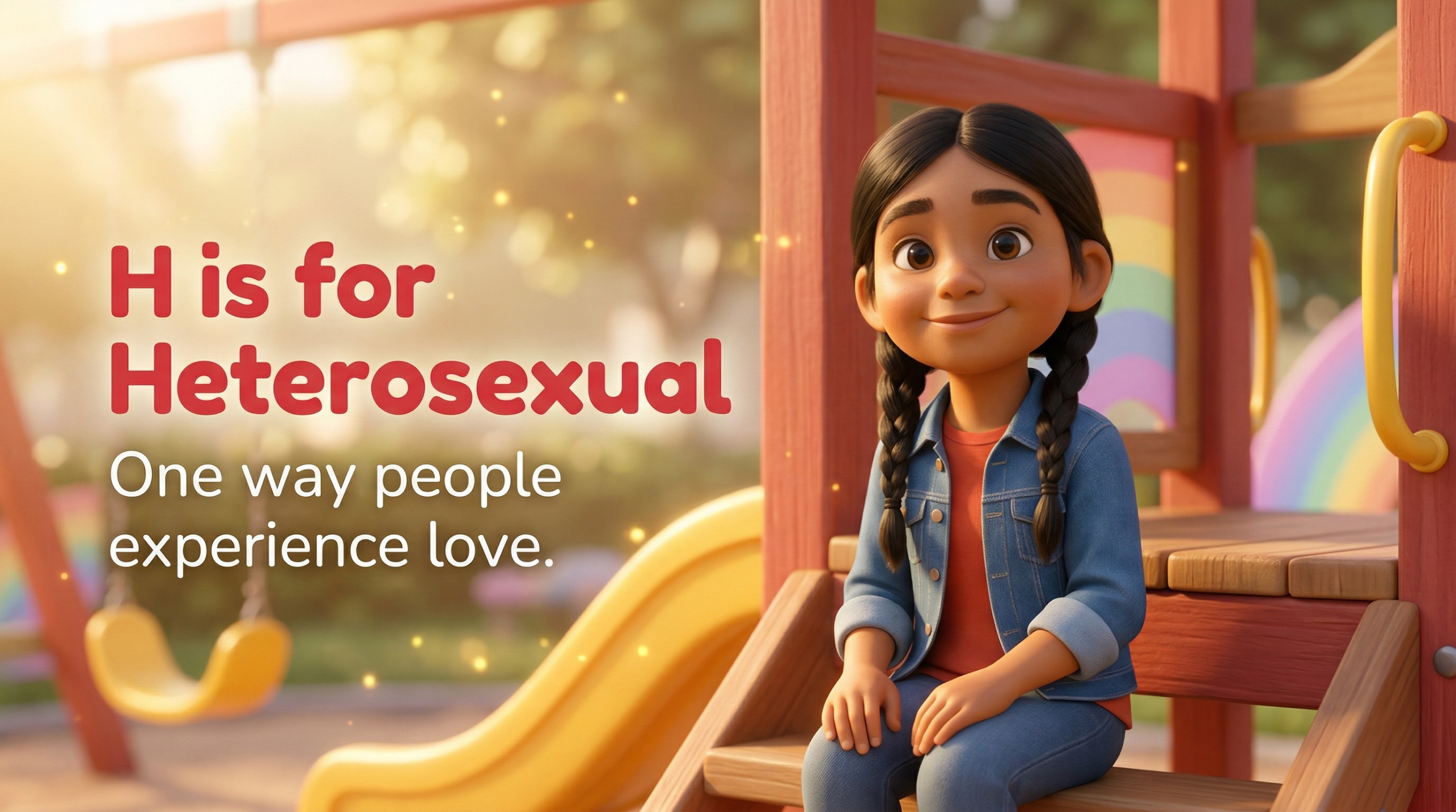
Heterosexual
One way of being—among many.
Episode Hook
There are different ways to feel—and all of them are okay.
Story Summary
At recess, a simple question—“Who has a crush?”—turns into something bigger. Through conversation, the group learns new words: heterosexual and homosexual—different ways people experience attraction.
What Kids Will Learn
- What heterosexual and homosexual mean
- That people experience attraction in different ways
- That it’s okay not to have everything figured out
- That all identities deserve respect
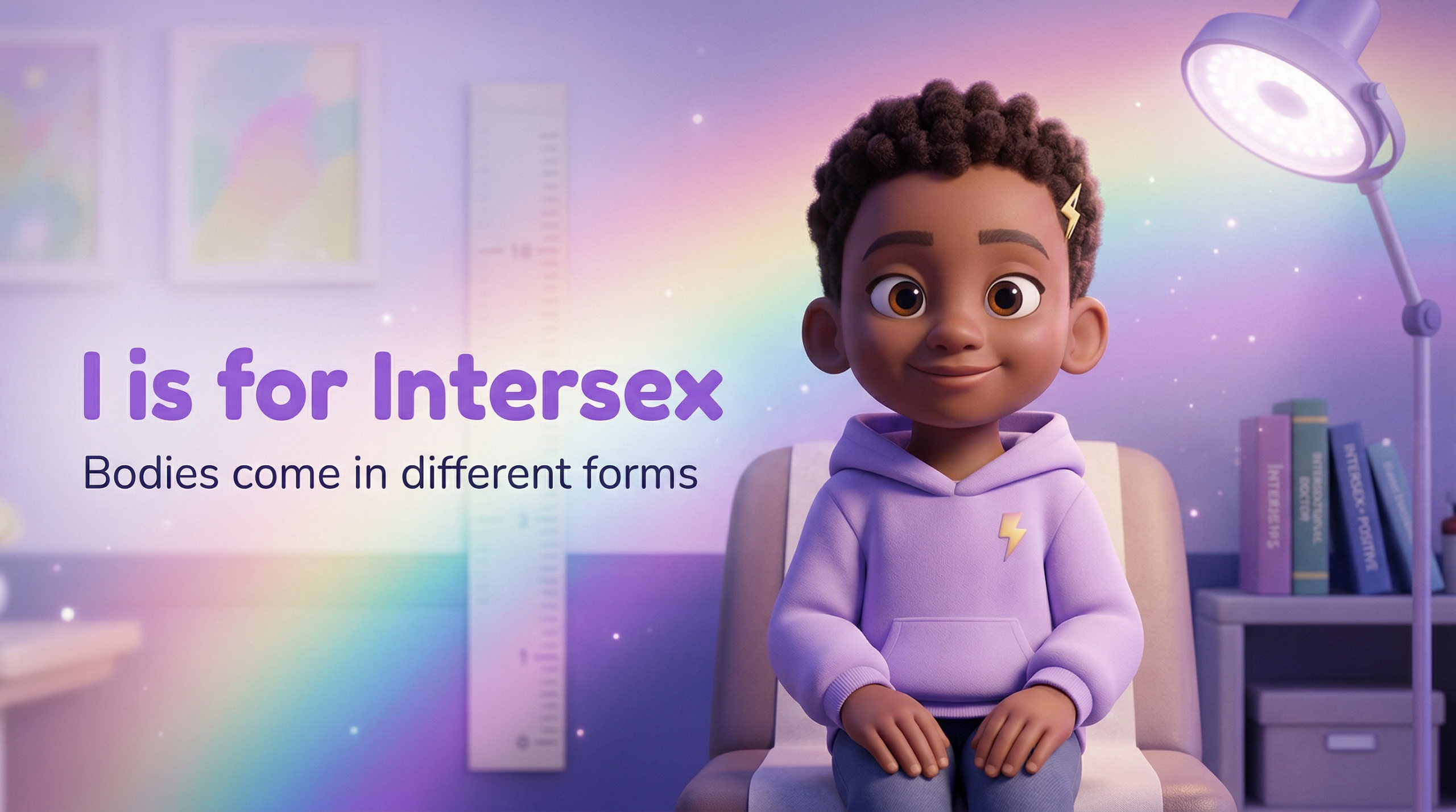
Intersex
Bodies come in more variations than most people think.
Episode Hook
Not every body fits into one box—and it doesn’t have to.
Story Summary
During an art activity, Amari shares that she's intersex. Through a calm, honest explanation—with support from Ms. López—the group learns that some bodies naturally include a mix of traits, and that this is a normal part of human diversity. What starts as confusion becomes understanding. And understanding becomes respect.
What Kids Will Learn
- What intersex means in simple, accurate terms
- That bodies can naturally vary in different ways
- That differences are not something to “fix”
- How learning leads to empathy and respect
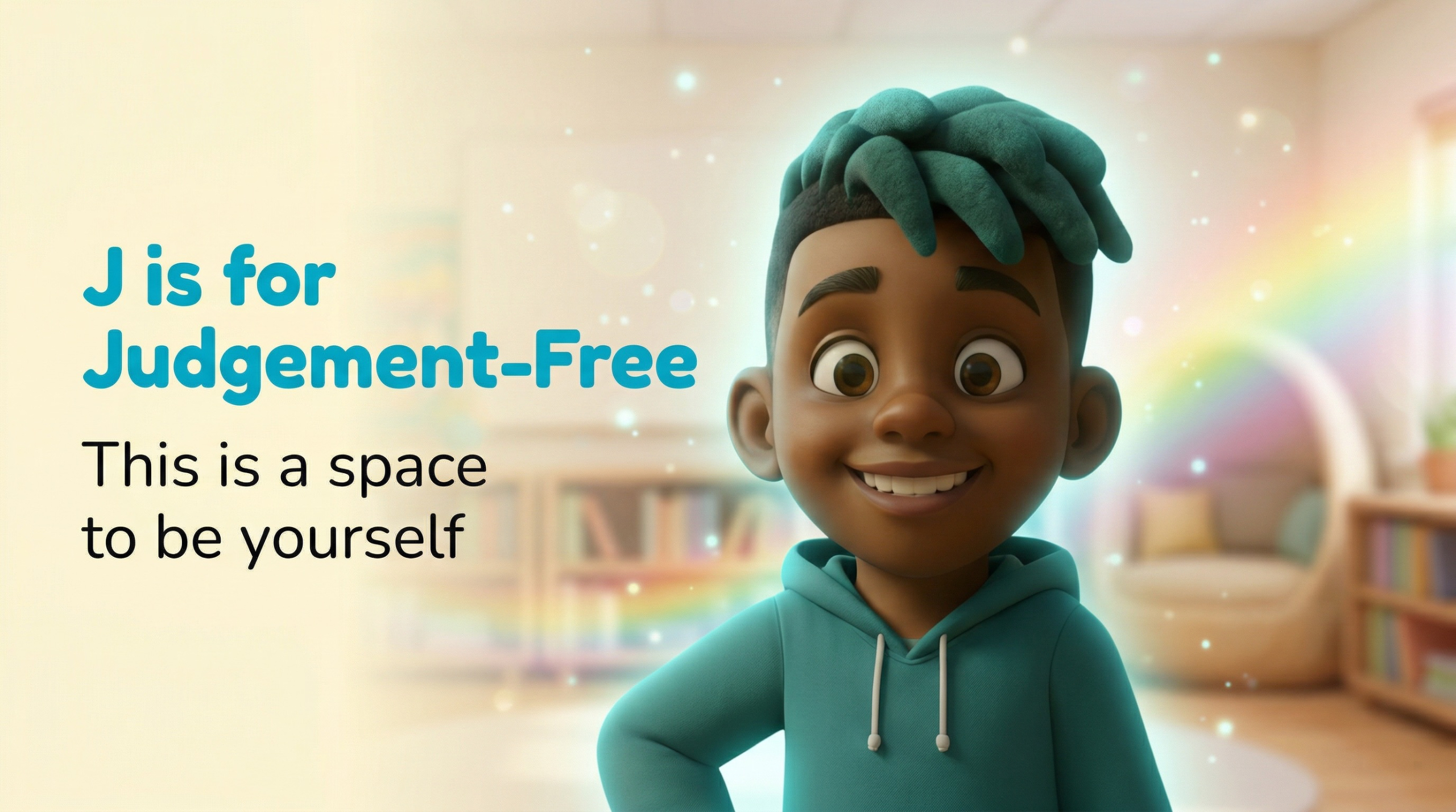
Judgement-Free Zone
Safe spaces let everyone be themselves.
Episode Hook
What if what you think you know… isn’t the full story?
Story Summary
When a new student enters the classroom, whispers start immediately. Before anyone says hello, assumptions take over. Then, Jordan pauses and realizes, “We didn’t even ask who they are.”
With one action, Jordan breaks through a wall—and the entire maze begins to fall. The group reaches out. The new student opens up. What once felt distant becomes connection.
What Kids Will Learn
- What judgment is and how quickly it happens
- How assumptions can create distance and harm
- That understanding requires curiosity, not conclusions
- How one person can shift the entire dynamic
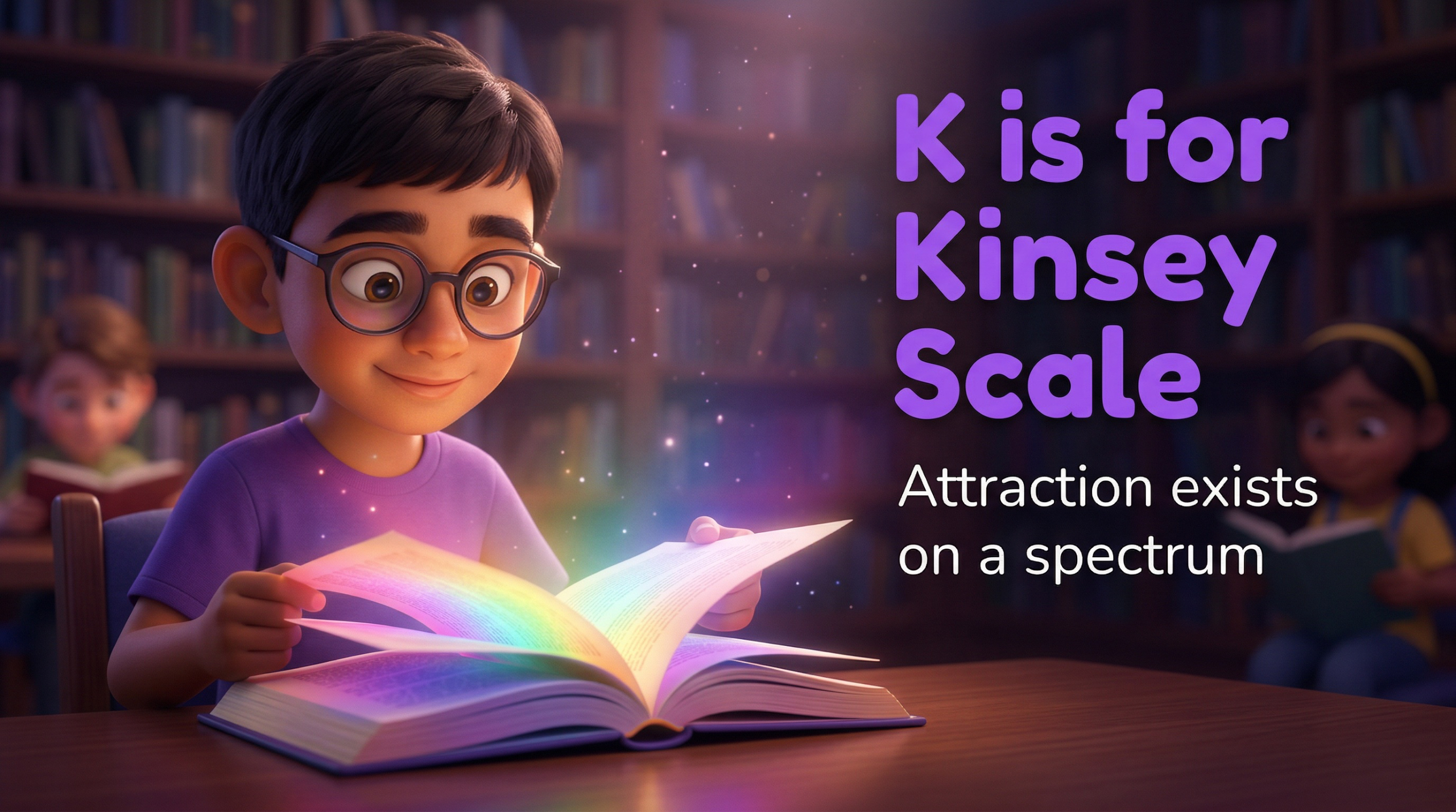
Kinsey Scale
Attraction exists on a spectrum.
Episode Hook
Love isn’t just one thing—it’s a spectrum.
Story Summary
While exploring a book from 1948, Dev discovers something surprising. People aren’t just “straight” or “gay”—attraction exists on a scale. As the group learns about Dr. Alfred Kinsey’s research, they begin to understand how revolutionary this idea was—especially at a time when talking about sexuality was taboo. What started as a scientific discovery becomes something deeper—language for understanding ourselves and each other.
What Kids Will Learn
- What the Kinsey Scale is (in simple terms)
- That attraction exists on a spectrum
- Why this idea was historically important
- That identity and feelings can be complex and valid
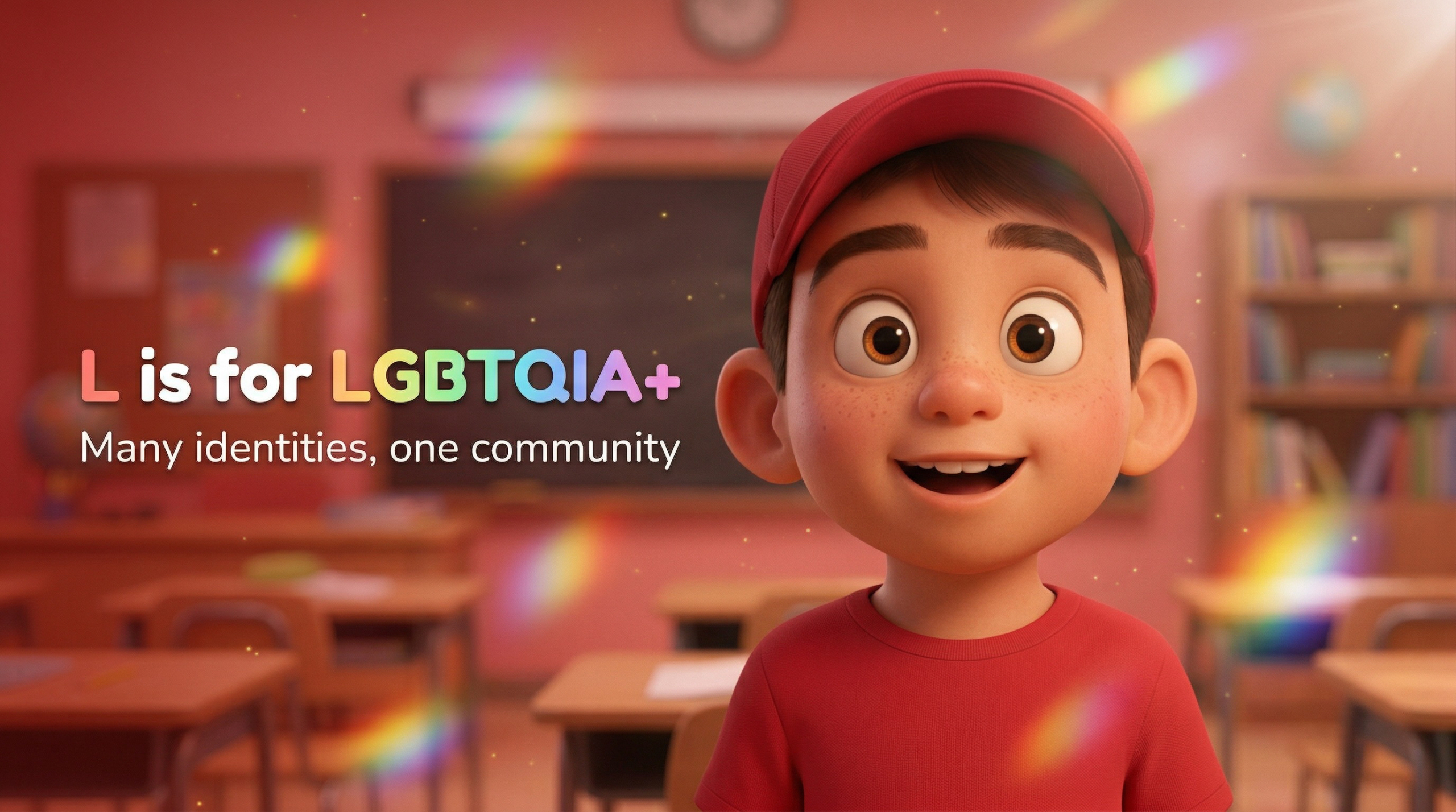
LGBTQIA+
Every letter tells a story.
Episode Hook
These letters aren’t just words—they’re people, stories, and history.
Story Summary
In history class, Ms. Flores introduces LGBTQIA+—not just as vocabulary, but as a living part of history. One by one, students learn what each letter represents Inspired, the class creates a mural of what Pride means to them: love, identity, family, and belonging. What begins as learning letters becomes something bigger—a shared vision of community.
What Kids Will Learn
- What LGBTQIA+ stands for
- That identities are connected to real people and history
- How labels can help people feel seen (not boxed in)
- That Pride is about belonging, not just identity
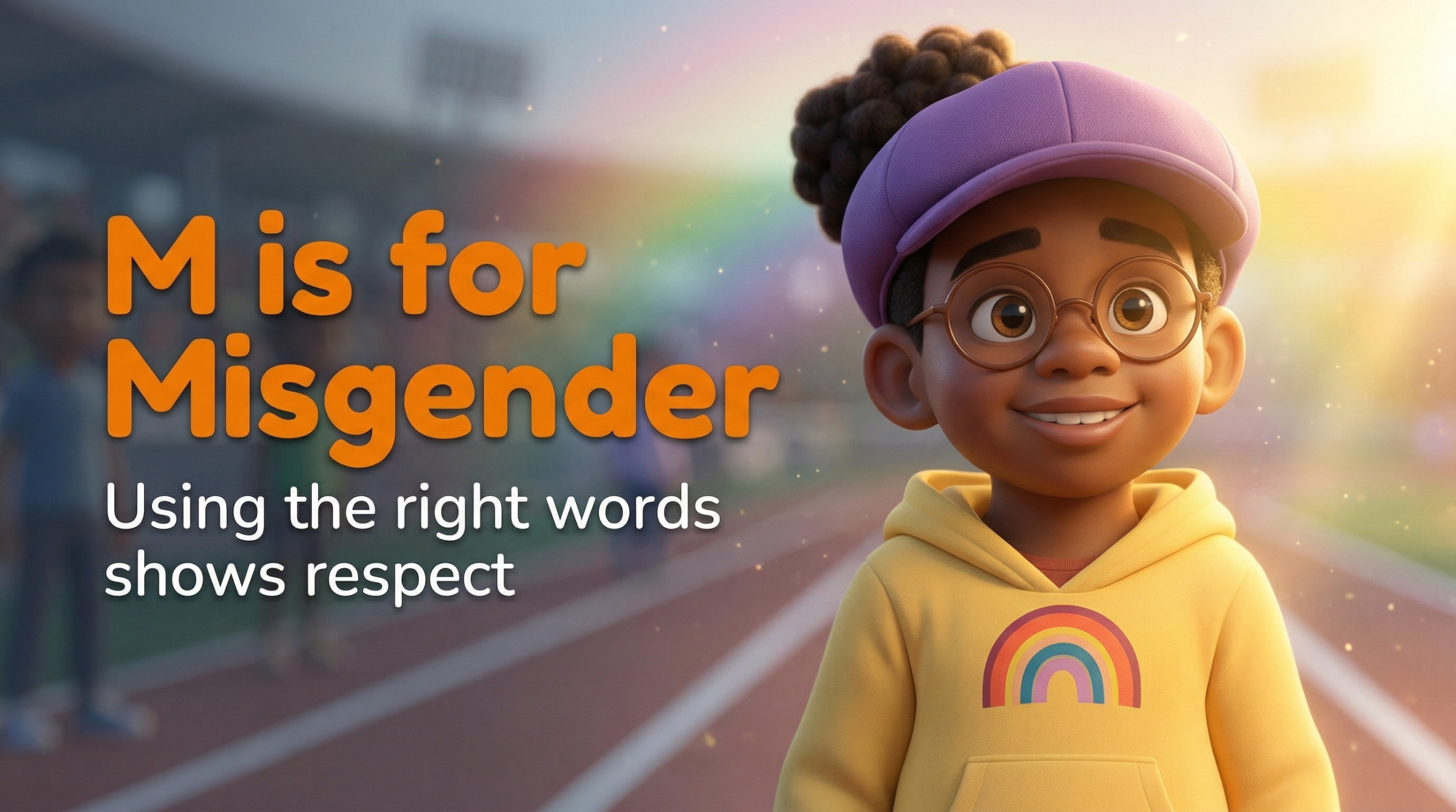
Misgender
Words matter—and getting them right matters too.
Episode Hook
Even small mistakes can leave a big impact.
Story Summary
At track meet day, Riley feels unstoppable—running strong, fully himself. But after crossing the finish line, the announcer makes a mistake "Amazing job to that young lady…”In an instant, Riley feels unseen. He considers staying quiet—until Jordan steps in.
With courage, Jordan asks for a correction. The moment shifts. Riley is seen again. What started as a mistake becomes something meaningful—because someone chose to make it right.
What Kids Will Learn
- What misgendering is
- Why even accidental mistakes can hurt
- How to respectfully correct others
- What allyship looks like in action
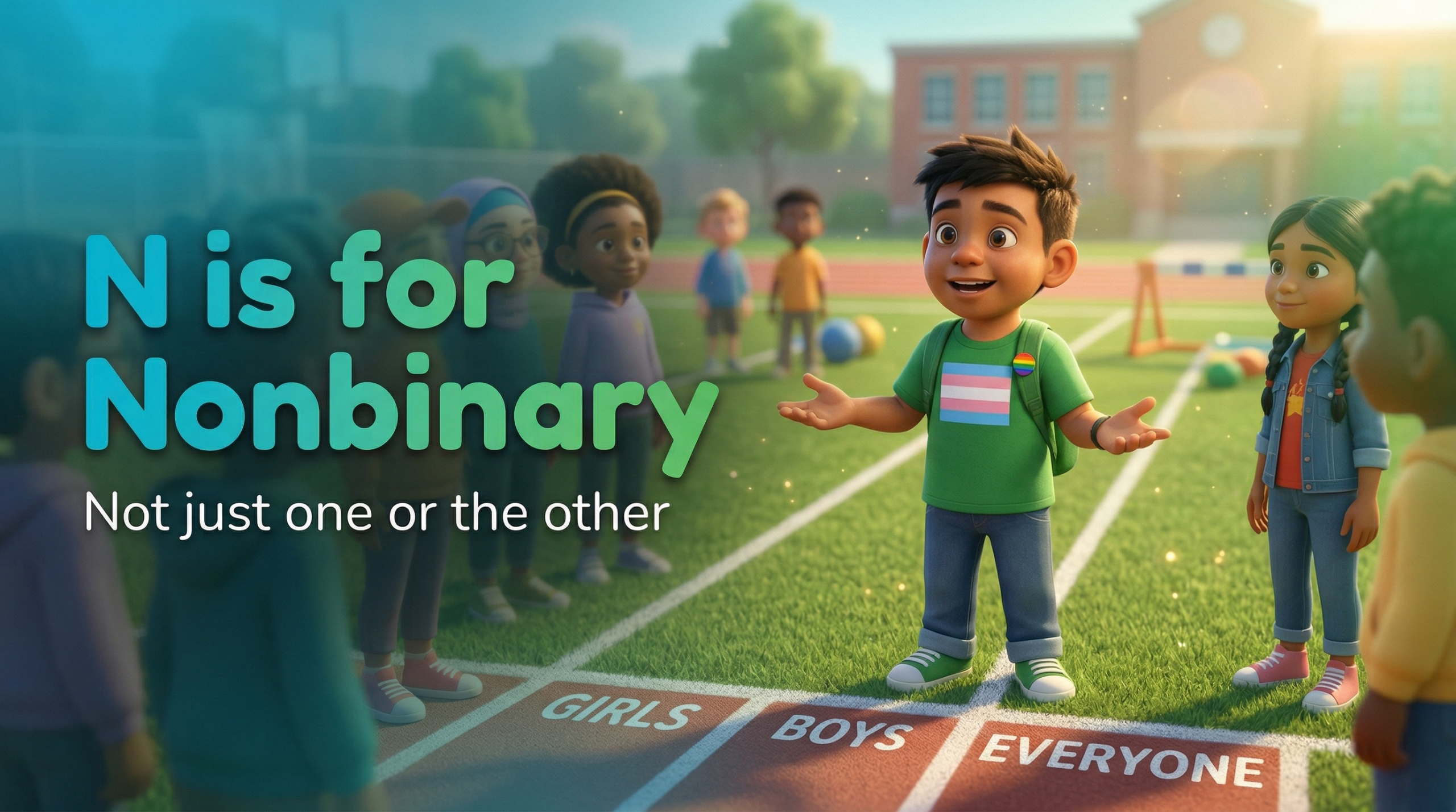
Nonbinary
Not just one or the other.
Episode Hook
What if the rules were never meant to fit everyone?
Story Summary
At Field Day, students are told to choose: boys or girls. But Alex hesitates. J asks the question no one else does: “What if someone isn’t a boy or a girl?" The moment shifts. Instead of forcing a choice, the coach draws a new lane—making space where there wasn’t any before. What started as division becomes inclusion.
What Kids Will Learn
- What nonbinary means
- That gender isn’t limited to two options
- How rules can exclude people—and be changed
- That inclusion benefits everyone
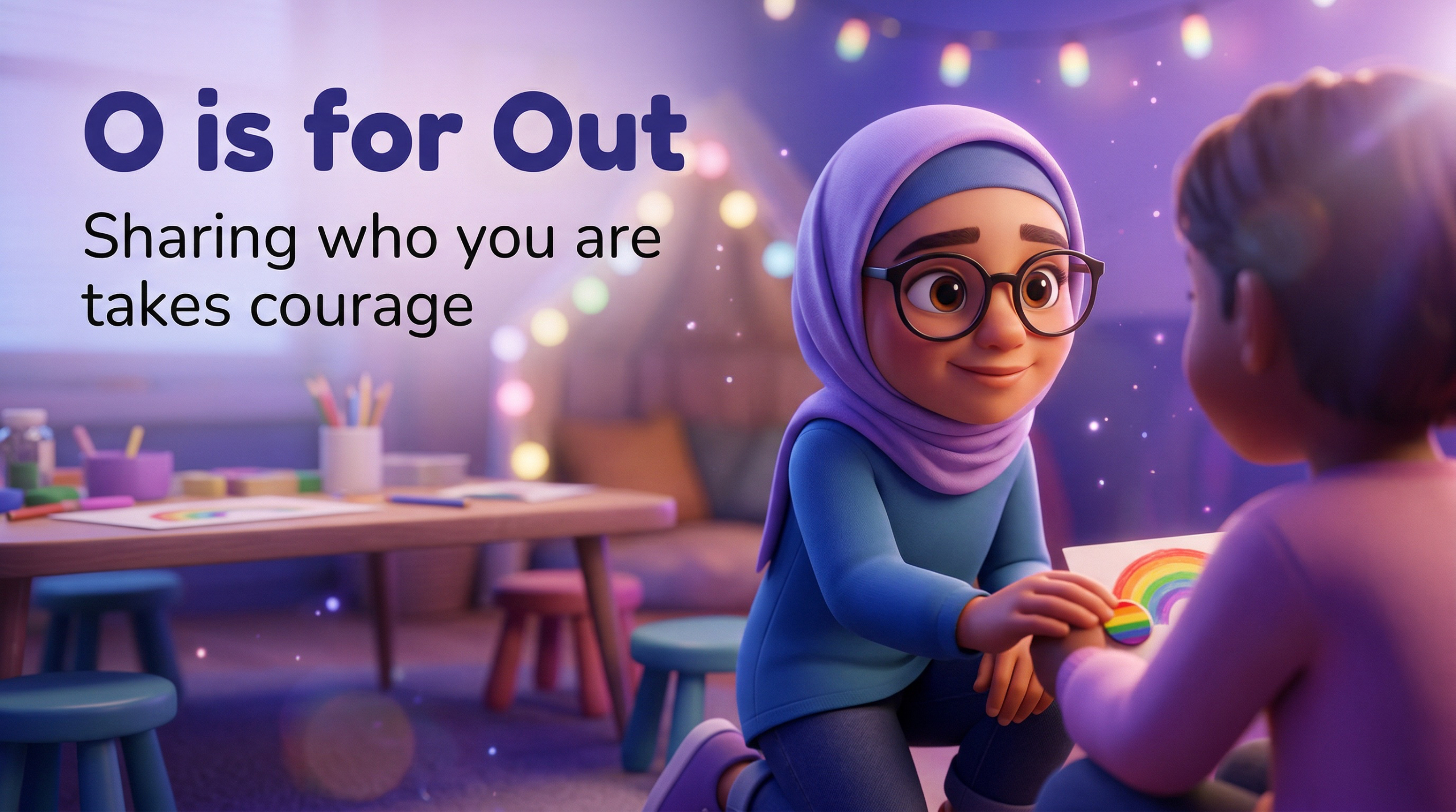
Out
Sharing your truth takes courage.
Episode Hook
What happens when you stop hiding—and start shining?
Story Summary
At the after-school talent show, Layla prepares for her biggest performance yet. But tonight isn’t just about music—it’s about truth. Then, in a quiet, powerful moment, Layla says: “I’m gay—and proud.” Surrounded by friends, music, and love, Layla’s moment becomes something bigger—not just being seen, but being celebrated.
What Kids Will Learn
- What it means to be “out”
- Why honesty about identity can feel scary—and freeing
- How support from others makes a difference
- That being yourself is something to be proud of
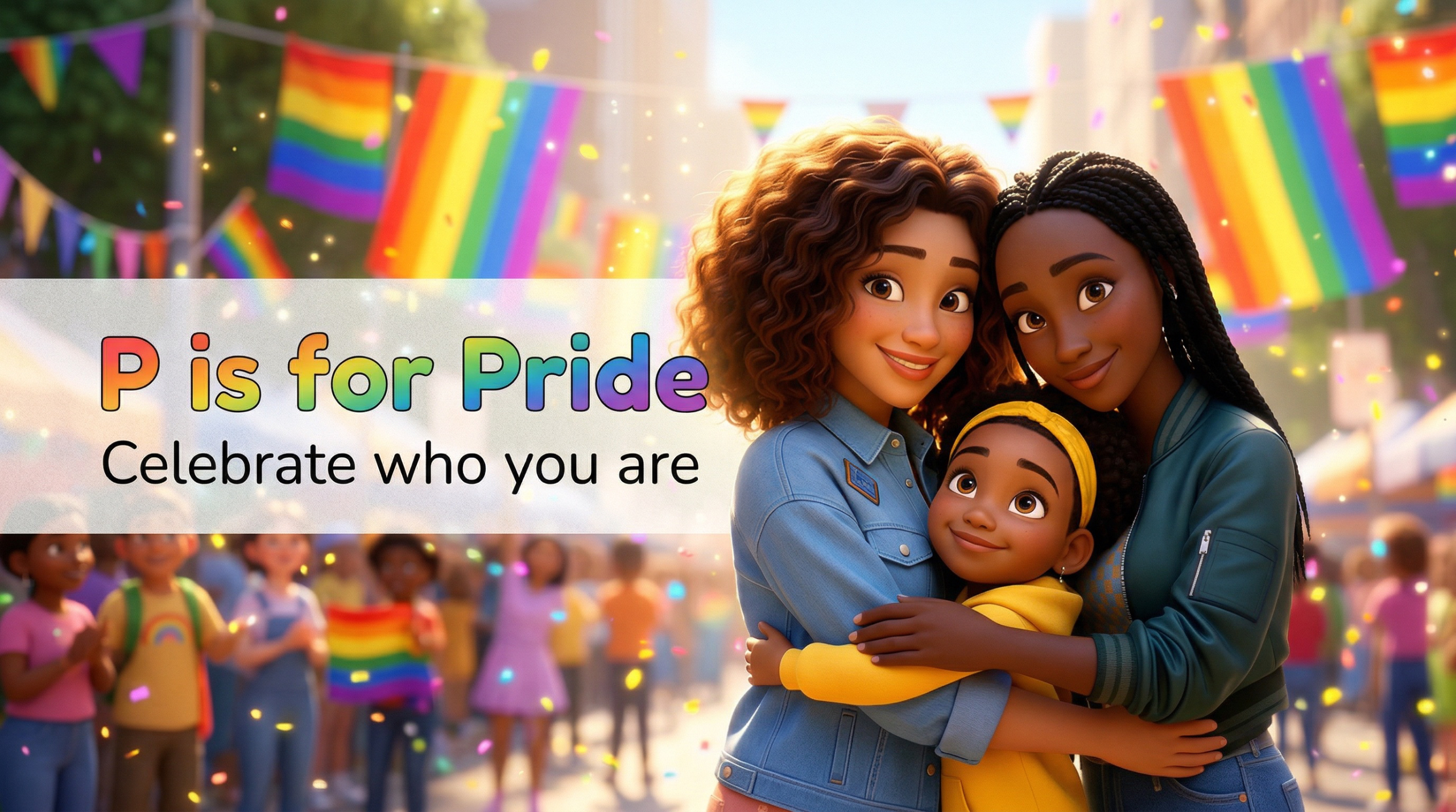
Pride
Celebration, history, and community.
Episode Hook
Pride is love—out loud.
Story Summary
As Maya and her moms prepare for Pride, the day feels full of color, joy, and glitter. But Pride isn’t just a parade—it’s history. Through conversation, Maya learns that Pride began with resistance, when people stood up for the right to live and love freely during the Stonewall Uprising. Her moms share their own journeys—fear, loss, and the courage it took to be themselves. For Maya, Pride isn’t just something she attends—it’s something she inherits.
What Kids Will Learn
- What Pride means today and where it comes from
- That Pride began as protest and continues as celebration
- How family, identity, and history are connected
- Why visibility and joy matter
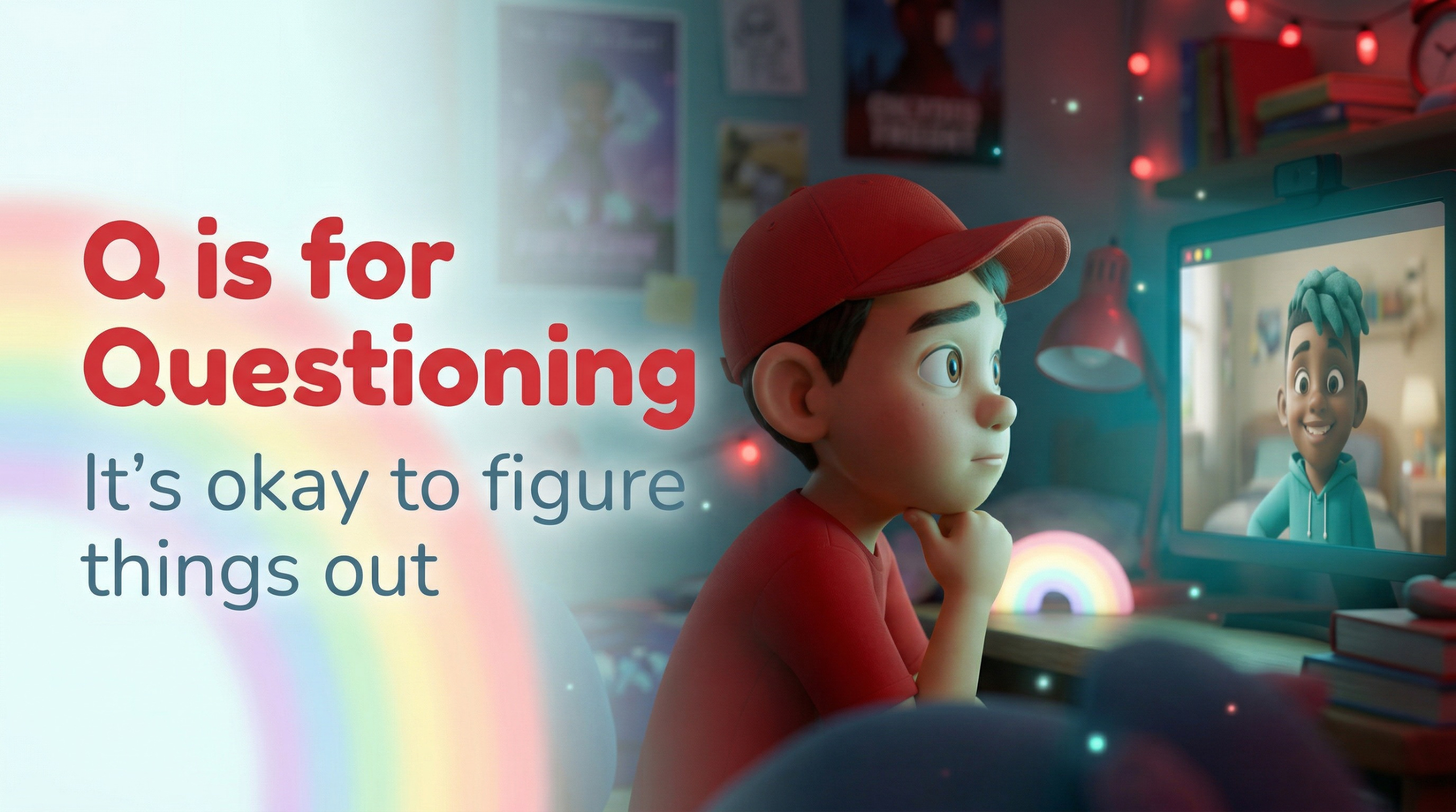
Questioning
It’s okay not to have all the answers.
Episode Hook
You don’t have to have it all figured out.
Story Summary
Alone in his room, Sam starts to wonder about something he can’t quite name. During a video call, he opens up to Jordan. He’s not sure who he likes—or what his feelings mean. Instead of pressure, he finds reassurance.
Jordan reminds him that questioning isn’t weird—it’s normal. Through conversation, laughter, and honesty, Sam realizes he doesn’t need answers right away. What matters is feeling safe enough to ask the questions.
What Kids Will Learn
- What questioning means
- That uncertainty is a normal part of identity
- That labels aren’t required
- The importance of safe, supportive conversations
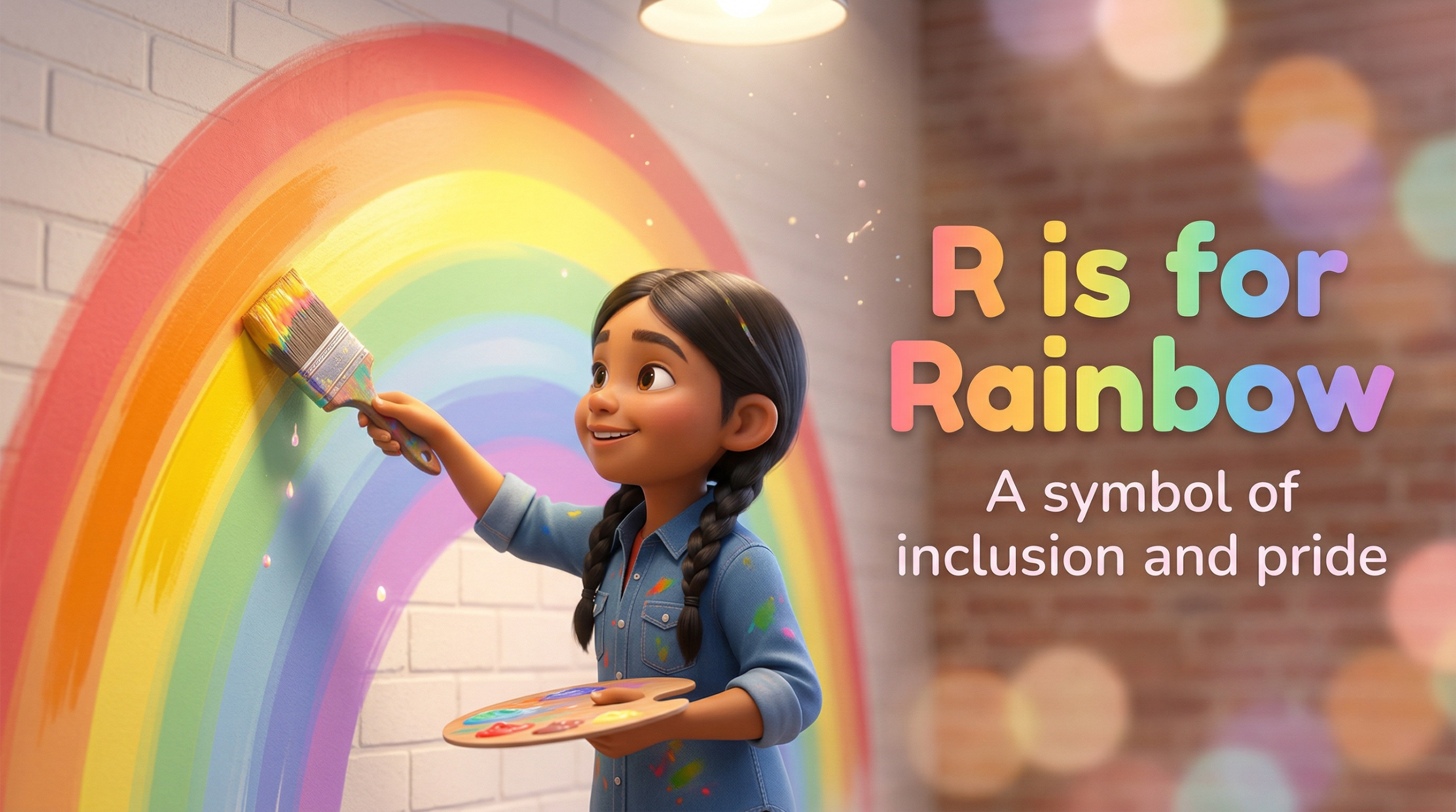
Rainbow
A symbol of inclusion and belonging.
Episode Hook
The Rainbow didn’t stay the same—because understanding keeps growing.
Story Summary
When Riley introduces the Rainbow Flag, the group thinks they already know what it means. But Riley reveals there’s more to the story. By the end, the group understands that the Rainbow isn’t just colors. It’s people, history, and belonging.
What Kids Will Learn
- The meaning behind different Pride flag colors and symbols
- How the Pride flag has evolved over time
- Why representation matters
- That inclusion grows when communities make space for others
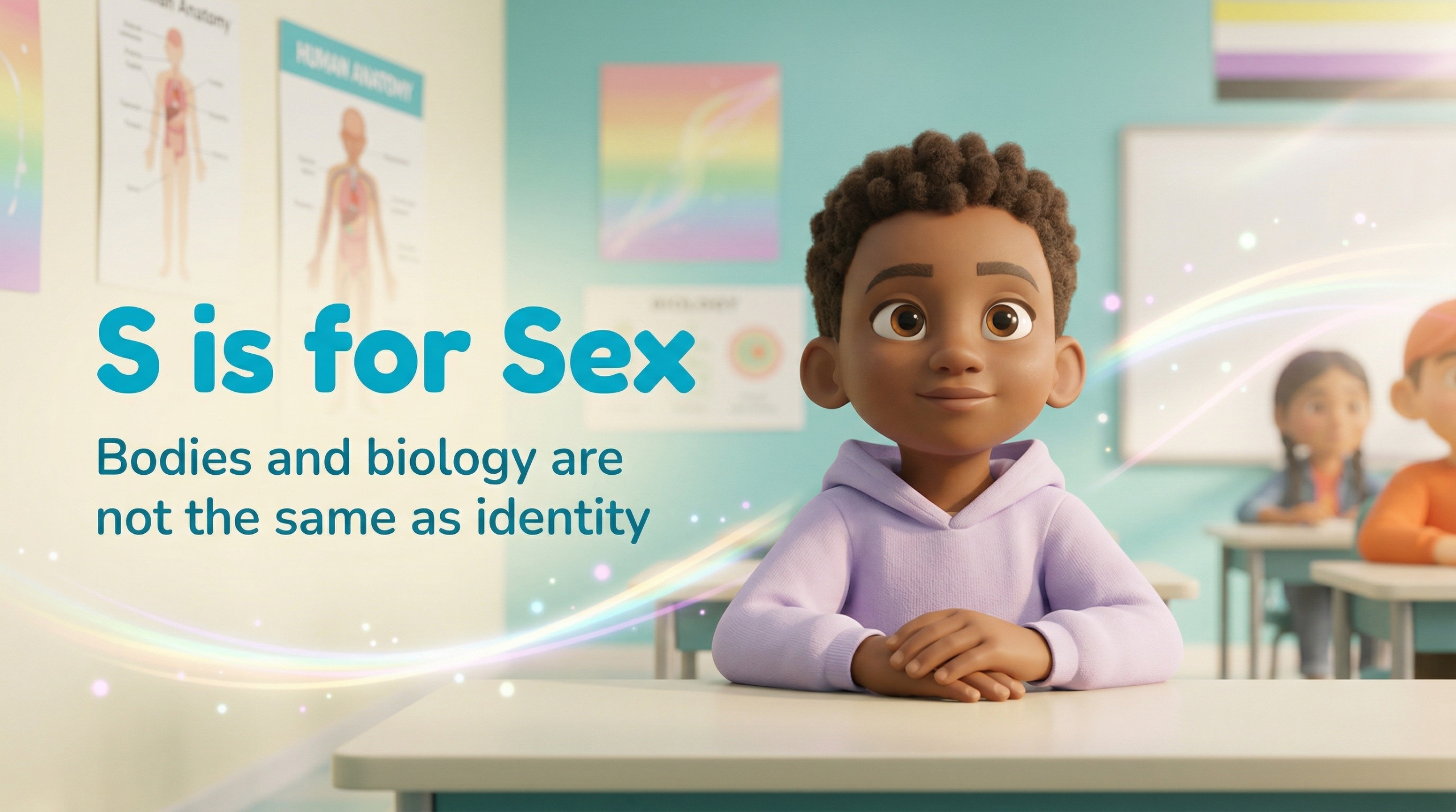
Sex
Bodies and identity are not the same thing.
Episode Hook
Bodies tell part of the story—not the whole story.
Story Summary
During health class, the teacher explains that sex is about biology—things like chromosomes, hormones, and anatomy—not behavior or identity. The students also learn an important distinction: Sex is about the body. Gender identity is about who someone knows themselves to be inside.
By the end of the lesson, the class understands that science and empathy belong together—and that respecting people means listening to who they say they are.
What Kids Will Learn
- What biological sex means
- The difference between sex and gender identity
- That intersex variations are natural
- Why respect and accurate language matter
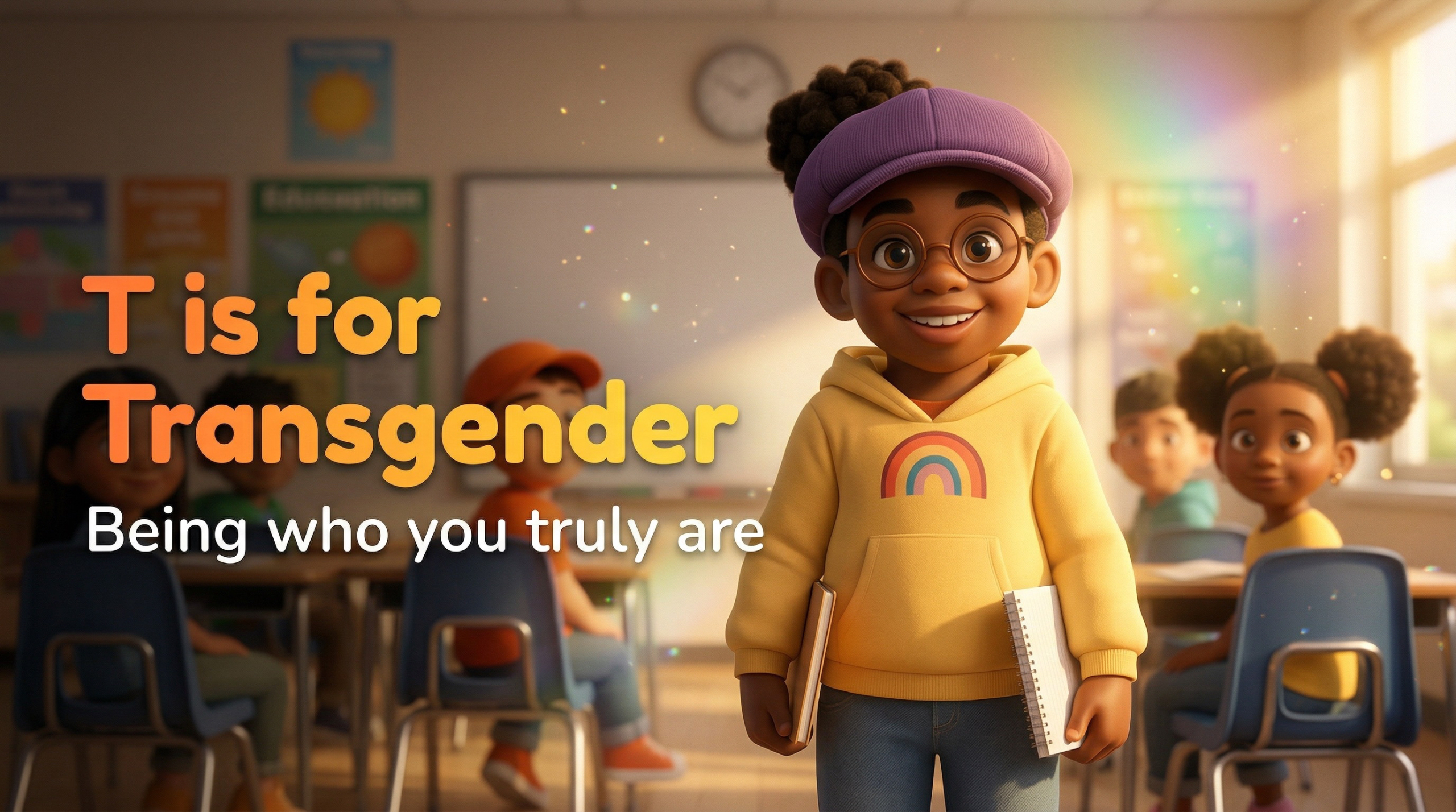
Transgender
Living as your true self.
Episode Hook
There’s no one right way to be trans.
Story Summary
When the class begins learning about transgender identity, Riley quietly worries they might not be “trans enough.” But Alex explains something important: There’s no single path under the trans umbrella. Some people change names or pronouns. Some transition medically. Some do both. Some do neither.
Then Mr. Jordan shares his own story—how he understood who he was when he was young, but chose medical transition later as an adult. Through conversation, art, and reflection, Riley realizes that being trans isn’t about proving anything to others. It’s about being yourself.
What Kids Will Learn
- What transgender means
- That trans experiences are not all the same
- The difference between social and medical transition
- That identity doesn’t need to be “proven”
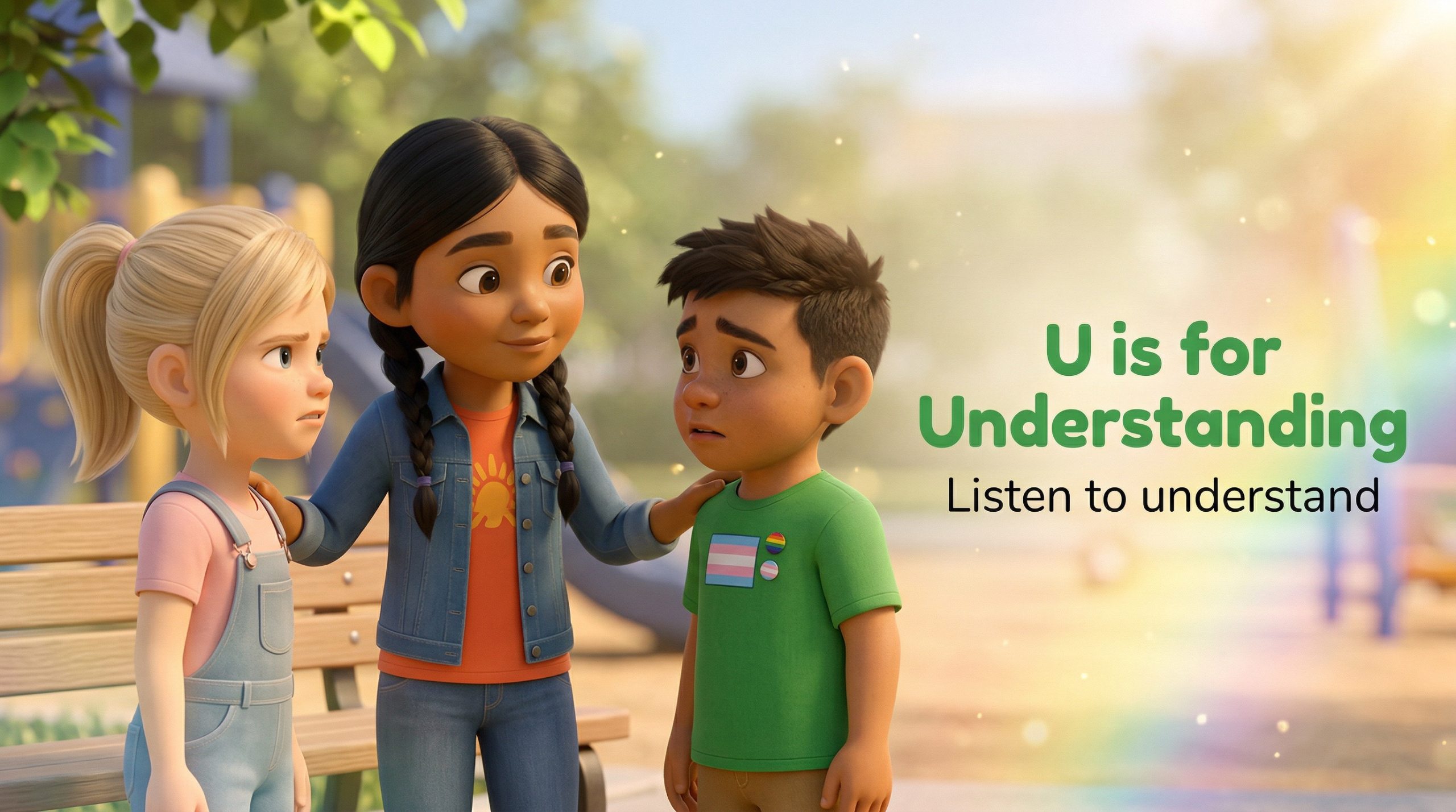
Understanding
Listening is where allyship begins.
Episode Hook
Sometimes the bravest thing you can say is: “I want to learn.”
Story Summary
At recess, a tense conversation begins with things Emily has heard from adults and online about LGBTQIA+ people. Instead of attacking her, the group pauses and talks. Slowly, the conversation shifts from fear and assumptions to curiosity and empathy.
By the end, Emily realizes something powerful: Understanding doesn’t mean knowing everything—it means being willing to grow.
What Kids Will Learn
- How harmful ideas can spread without being questioned
- Why listening matters more than assumptions
- How allyship can begin through conversation
- That people can unlearn harmful beliefs
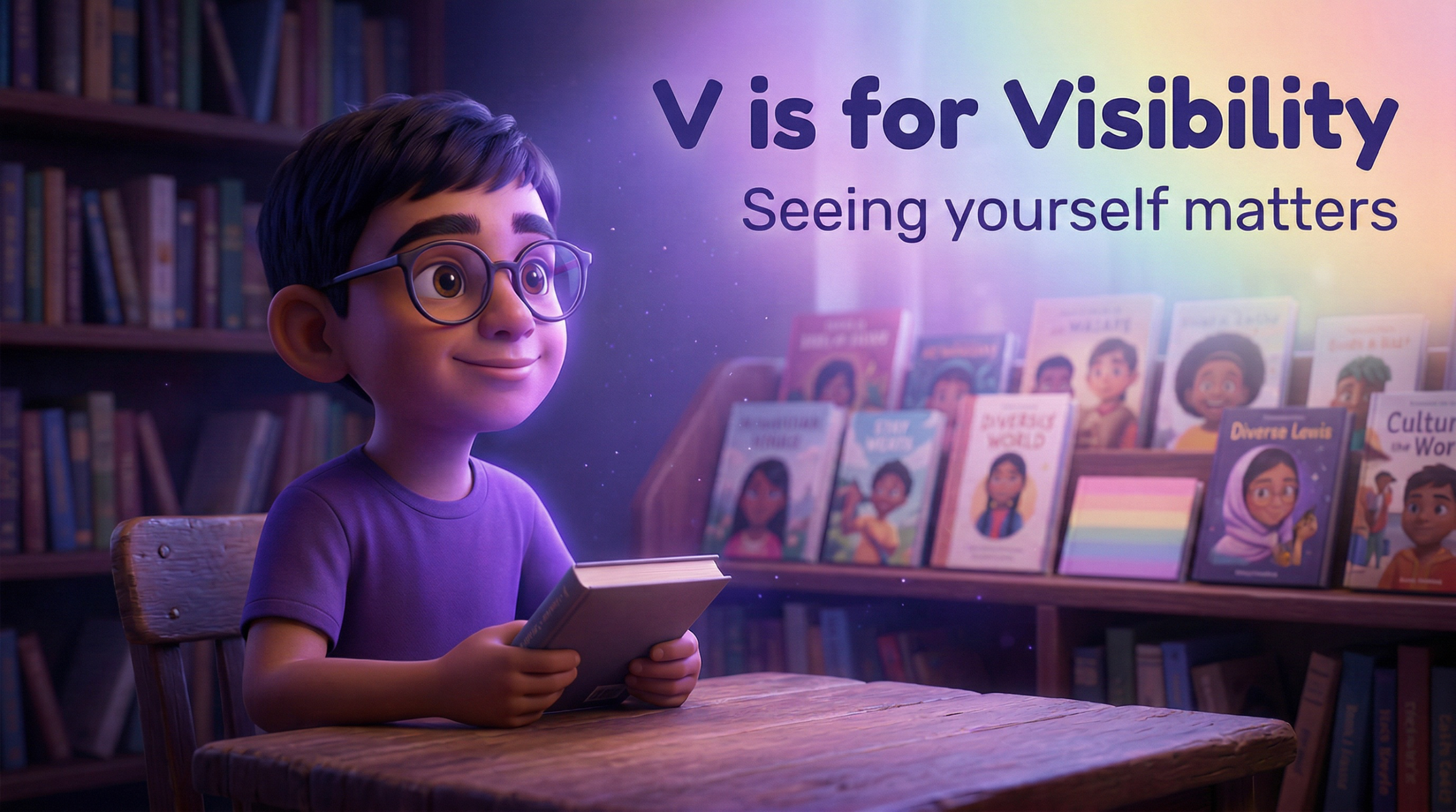
Visibility
Seeing yourself matters.
Episode Hook
When people can see themselves in the world, the world becomes safer.
Story Summary
At a special library event about LGBTQIA+ stories, the group learns that visibility is more than attention—it’s recognition, safety, and belonging. The librarian introduces Miss Luminary, a drag performer who uses fashion, storytelling, and performance as art. They also discover how visibility has helped LGBTQIA+ people survive, build community, and fight erasure—especially in Black and Brown queer communities.
As they discuss figures like Marsha P. Johnson, Sylvia Rivera, RuPaul, Janelle Monáe, Zendaya, Sam Smith, and Kehlani, the students realize visibility isn’t about being loud. It’s about being real—and helping others feel less alone.
What Kids Will Learn
- What visibility means and why it matters
- The difference between drag performance and gender identity
- How representation helps people feel seen
- Why LGBTQIA+ history and stories matter
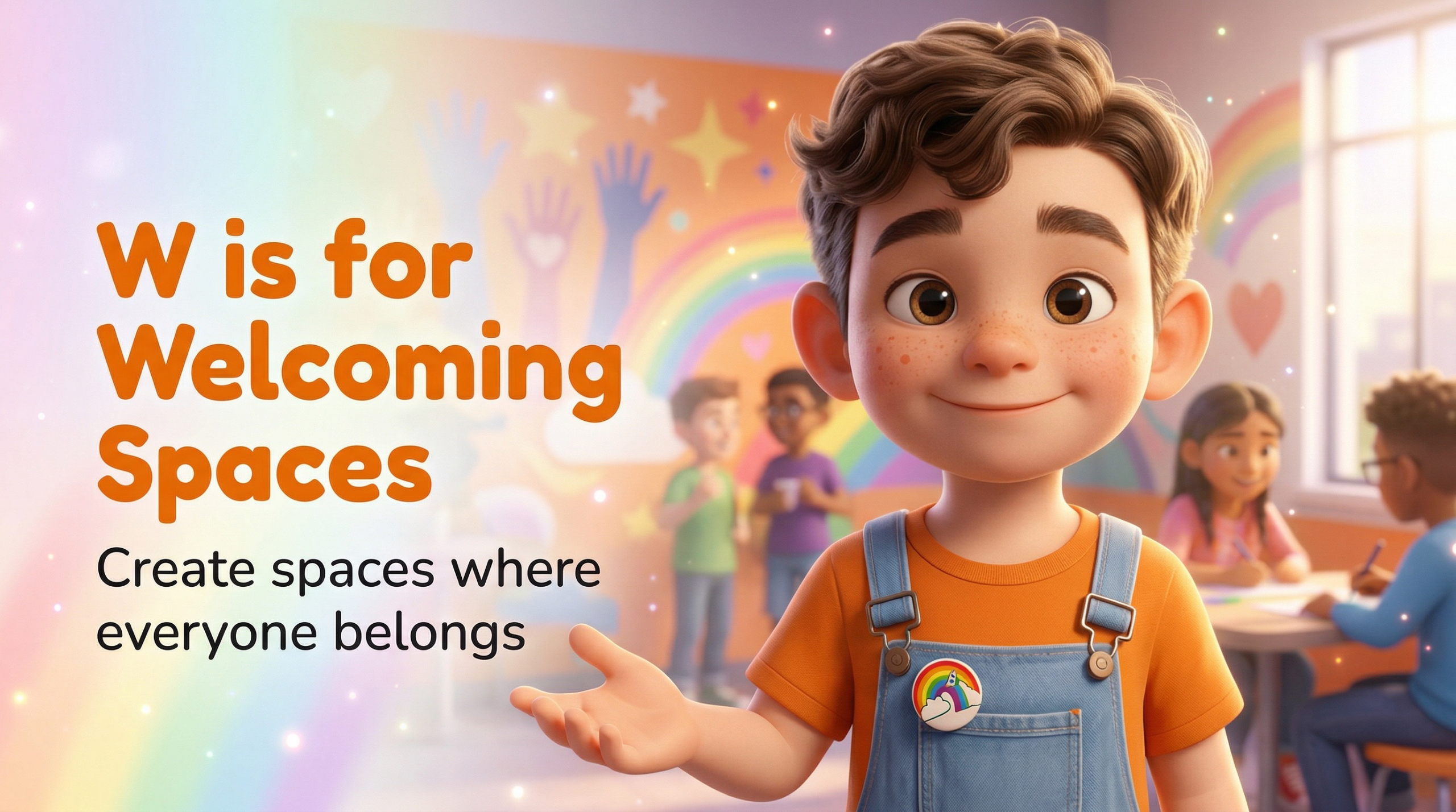
Welcoming Spaces
Inclusion is something you build.
Episode Hook
A place can be open to everyone—and still not feel safe for everyone.
Story Summary
For many LGBTQIA+ kids, the question isn’t whether a place is open—it’s whether it feels safe. Inside a community gathering space, small moments of care begin to build trust. From one room to entire communities, the students learn that welcoming spaces aren’t accidental. They are built—through care, respect, and protection.
What Kids Will Learn
- What makes a space feel welcoming or unsafe
- What “judgment-free” really means
- The idea of third spaces and why they matter
- How small actions help people feel respected and included
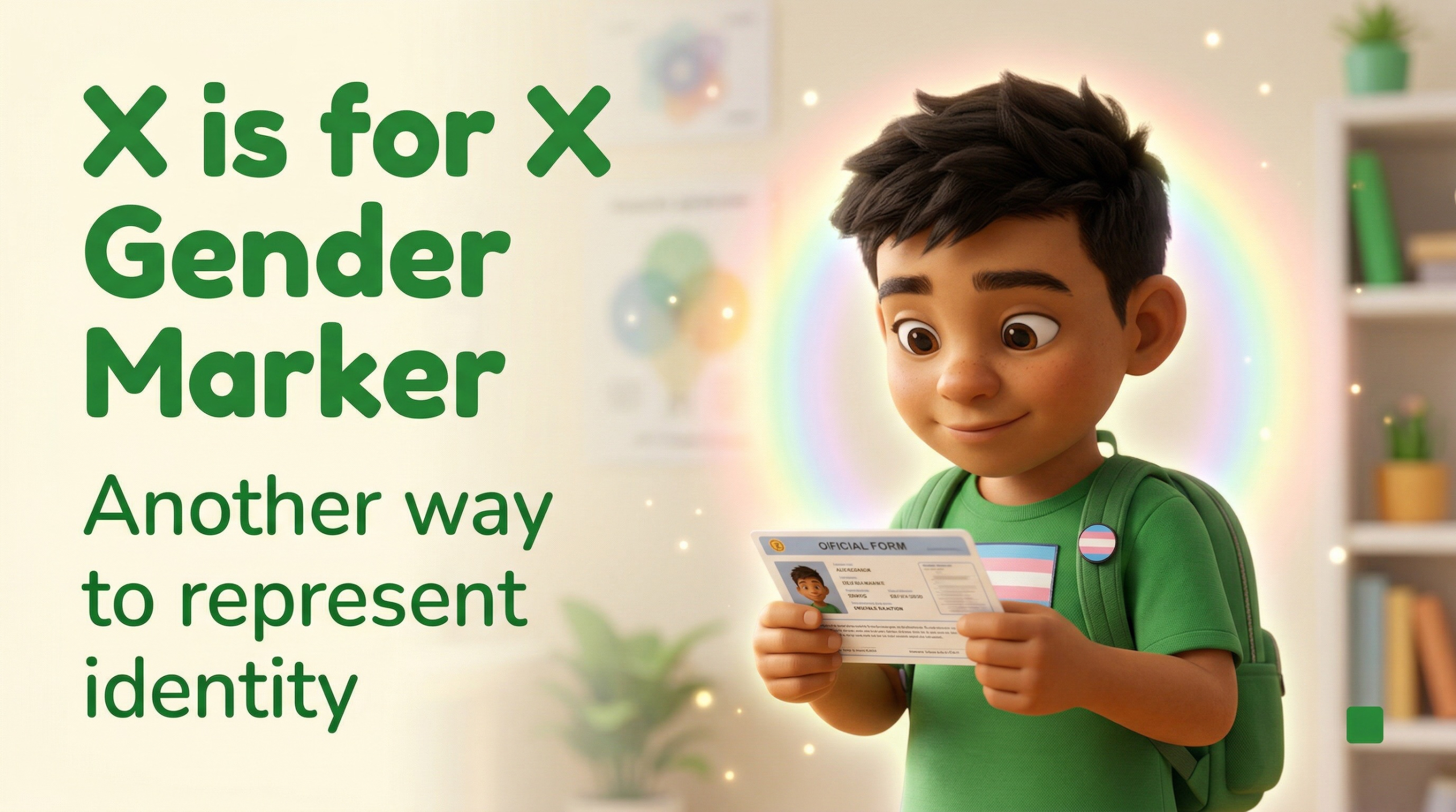
X Gender Marker
Identity doesn’t have to fit in a box.
Episode Hook
Sometimes one small option can help someone feel fully seen.
Story Summary
On Student ID Day, the school announces an important update:
Students can now choose M, F, or X on their forms. For many students, it’s just another checkbox. But for Alex, it feels different. What seems small on paper becomes something bigger––recognition, visibility, and the feeling of finally having an option that fits.
What Kids Will Learn
- What an X gender marker is
- Why some people choose it and others don’t
- That gender diversity exists in real life and policies
- How representation and visibility matter
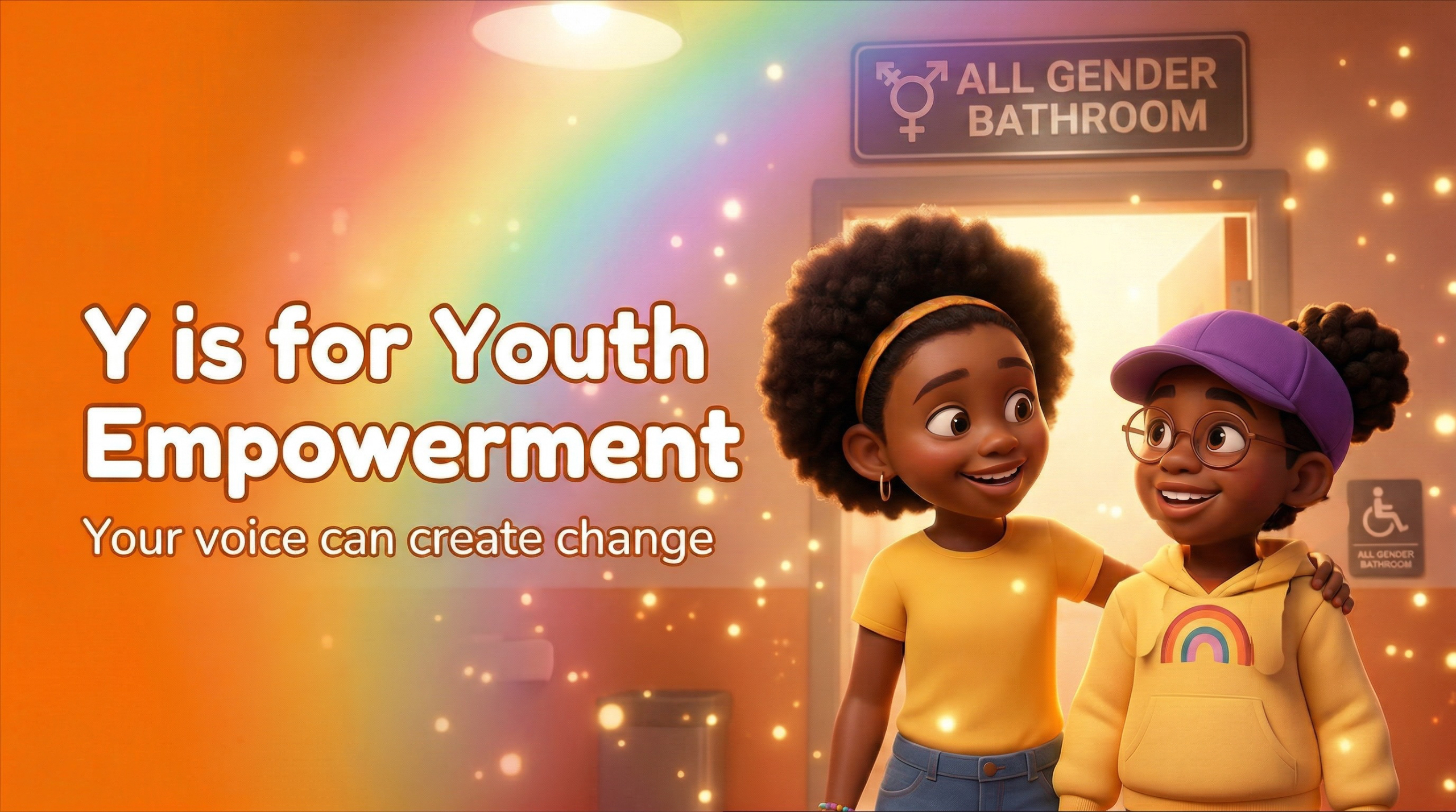
Youth Empowerment
Kids can lead change too.
Episode Hook
Sometimes empowerment starts with one small change that says: you belong here too.
Story Summary
When the school adds an all-gender restroom, reactions spread quickly through the hallway.Some students feel uncertain. Others feel relieved. By the end, Riley speaks at a school assembly alongside Maya, helping turn a controversial hallway conversation into an opportunity for understanding and inclusion.
What Kids Will Learn
- What youth empowerment means
- How respectful dialogue can reduce fear and misunderstanding
- Why inclusive spaces matter
- That dignity and privacy can exist together
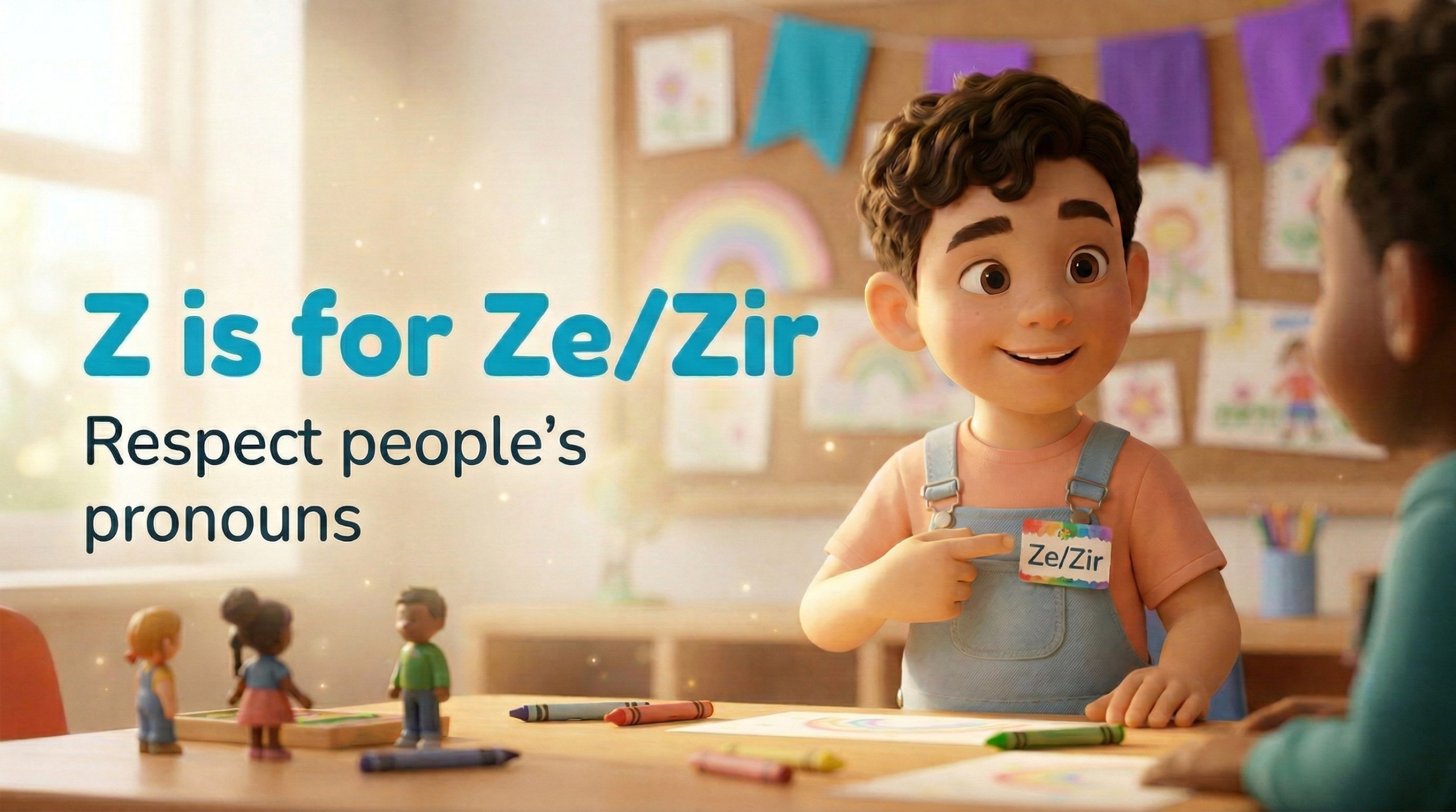
Ze/Zir
Respect starts with language.
Episode Hook
Sometimes respect starts with learning a new word.
Story Summary
During class, the students learn that language changes over time—and sometimes new words help people feel more fully seen. That’s when J shares: Ze uses ze and zir pronouns.
At first, some classmates are confused. But through practice, questions, and gentle correction, they begin to understand that pronouns are about respect—not perfection. By the end, the class realizes that small words can carry big meaning—and that listening carefully is one way people show care for each other.
What Kids Will Learn
- What ze/zir pronouns are
- Why some people use different pronouns
- How to respectfully correct mistakes
- That language evolves to include more experiences